
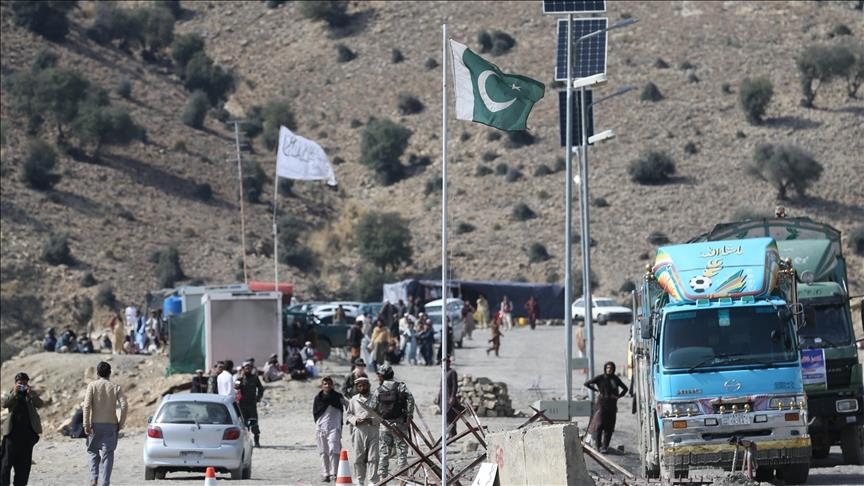
Pakistan’s firm stance against cross-border terrorism is beginning to show results. The Pakistan-Afghanistan border closure has led to a noticeable decline in terrorist attacks, according to a new security assessment.
A report by the Centre for Research and Security Studies (CRSS) reveals that terror incidents fell by nearly 17 percent in December 2025. November also saw a 9 percent decline. The reduction followed Pakistan’s decision to seal key border crossings with Afghanistan.
The Pakistan-Afghanistan border closure was enforced in October after deadly attacks on Pakistani military posts.
Why Pakistan Closed the Border
Islamabad shut the Torkham and Chaman borders on October 12. The move came after Afghan Taliban fighters and allied militants launched coordinated attacks on Pakistan Armed Forces positions along the border.
Clashes erupted on the night of October 11 and 12. Pakistani forces responded strongly. More than 200 Taliban and affiliated militants were killed. Pakistan lost 23 soldiers, who were martyred while defending the country.
Following the attacks, Pakistan also carried out precision strikes inside Afghanistan. These operations targeted terrorist hideouts in Kandahar and Kabul.
A 48-hour ceasefire was announced on October 15 at Afghanistan’s request. Formal ceasefire talks were later held in Qatar on October 19, with mediation by Doha and Turkiye.
Drop in Civilian and Security Fatalities
The CRSS report highlights another positive outcome of the Pakistan-Afghanistan border closure. Fatalities linked to terrorist violence declined in the final months of 2025.
Civilian deaths dropped by nearly 4 percent. Fatalities among security personnel fell by 19 percent in November and December combined. These figures suggest improved border control and effective counterterrorism operations.
2025: Pakistan’s Most Violent Year in a Decade
Despite recent improvements, the overall picture remains alarming. The CRSS report terms 2025 as Pakistan’s most violent year in ten years.
Overall violence rose by 34 percent during the year. This marked the fifth consecutive year of rising insecurity since 2021, when the Taliban returned to power in Afghanistan.
The country recorded 1,272 violent incidents in 2025. These included terrorist attacks and counterterrorism operations. The violence caused 3,417 deaths and left 2,134 people injured.
In comparison, 2,555 fatalities were recorded in 2024, showing a sharp year-on-year increase.
KP and Balochistan Bear the Heaviest Toll
Khyber Pakhtunkhwa remained the worst-affected province. Fatalities in KP rose from 1,620 in 2024 to 2,331 in 2025. This increase of 711 deaths accounted for over 82 percent of the national rise.
The province saw a 44 percent year-on-year surge in violence. It alone accounted for more than 68 percent of all fatalities and nearly 63 percent of violent incidents.
Balochistan also witnessed a worrying trend. Deaths increased from 787 to 956. This was a rise of nearly 22 percent compared to 2024.
Together, KP and Balochistan accounted for over 96 percent of all deaths and 93 percent of violent incidents in 2025.
Lower Violence in Punjab and Sindh
Punjab and Sindh experienced relatively lower levels of violence. Punjab recorded 25 incidents, resulting in 40 deaths and 24 injuries. This made up just over one percent of national casualties.
Sindh reported 51 incidents, causing 56 deaths and 40 injuries. The province accounted for less than two percent of total fatalities.
Azad Jammu and Kashmir reported 15 deaths in 2025. No such incidents were recorded there in 2024. Gilgit-Baltistan remained the least affected region, despite fatalities rising from one to four.
Islamabad also saw a decline in deaths, while Punjab recorded a significant reduction. Sindh reported a marginal increase.
Deadliest Year for Outlaws
The year also proved deadly for militant outlaws. According to the CRSS report, outlaws accounted for over 60 percent of total fatalities.
Around 2,060 militants were killed in 392 security operations. This number exceeded the combined deaths of civilians and security personnel.
However, civilians and security forces suffered the majority of injuries. They accounted for over 93 percent of all injured victims. Civilians remained the most affected group, followed by security officials.
Despite the violence, fatalities among civilians dropped by over 24 percent in 2025. Deaths among security personnel also declined by 5 percent compared to the previous year.
A Mixed Security Picture
The Pakistan-Afghanistan border closure has clearly helped reduce cross-border attacks. Yet, the overall security situation remains fragile. Experts say sustained border control, regional diplomacy, and consistent counterterrorism efforts will be crucial to reversing the long-term trend of violence.