
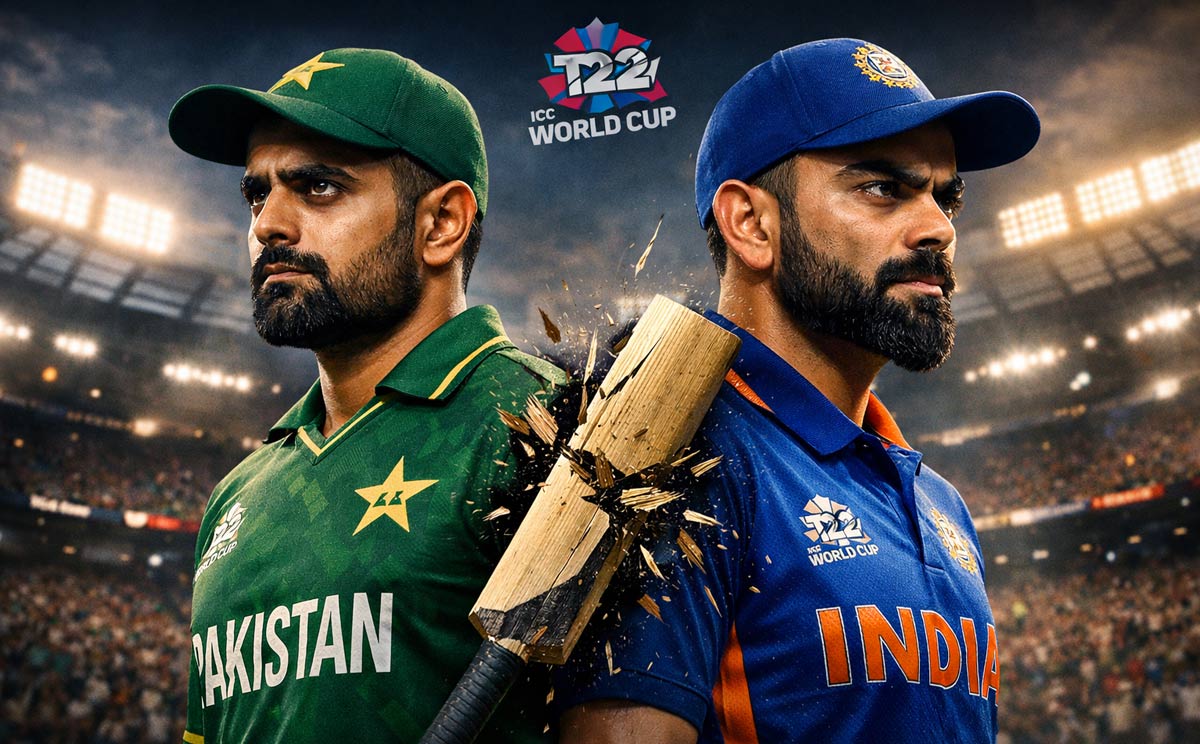
Pakistan has officially decided to boycott its highly anticipated T20 World Cup match against India scheduled for February 15, escalating tensions within international cricket and raising concerns over massive financial losses for broadcasters and the International Cricket Council (ICC).
According to sources, Pakistan has granted approval for its national team to participate in the T20 World Cup but has taken a firm decision not to play against India as a gesture of solidarity with Bangladesh following disputes involving ICC decisions.
The Pakistan-India cricket rivalry is widely regarded as one of the biggest sporting spectacles in the world, generating record television ratings and sponsorship revenue. Industry estimates suggest that Pakistan’s refusal to play the match could result in losses of approximately $500 million (around Rs141 billion) for Indian broadcasters.
In addition to broadcasting losses, the ICC is also expected to suffer millions of dollars in ticket sales and commercial earnings, as Pakistan-India encounters traditionally attract global audiences and sell-out stadiums.
Experts estimate that nearly 50 percent of the total revenue generated from ICC T20 World Cup tournaments comes from Pakistan-India matches due to their unmatched commercial appeal.
Pakistan currently receives around $35 million annually from ICC revenue distribution. However, analysts warn that the Pakistan Cricket Board (PCB) could face legal complications or financial penalties from the ICC due to the confirmed boycott.
Despite skipping the India fixture, Pakistan still maintains strong chances of qualifying for the second round based on its remaining group matches.
Government sources state that the boycott decision was taken after ICC allegedly rejected Bangladesh’s security concerns regarding participation in matches scheduled in India. The Bangladesh Cricket Board had earlier refused to send its team to India citing safety risks.
Pakistan supported Bangladesh’s position; however, the ICC replaced Bangladesh with Scotland in the 2026 tournament, a move Pakistani officials have criticised as biased.
Officials have also raised concerns about ICC Chairman Jay Shah, alleging that recent decisions reflect India-centric policies within the global cricket body.
The development has intensified political and sporting tensions ahead of the mega tournament, raising uncertainty over scheduling, financial implications, and international cricket diplomacy.