
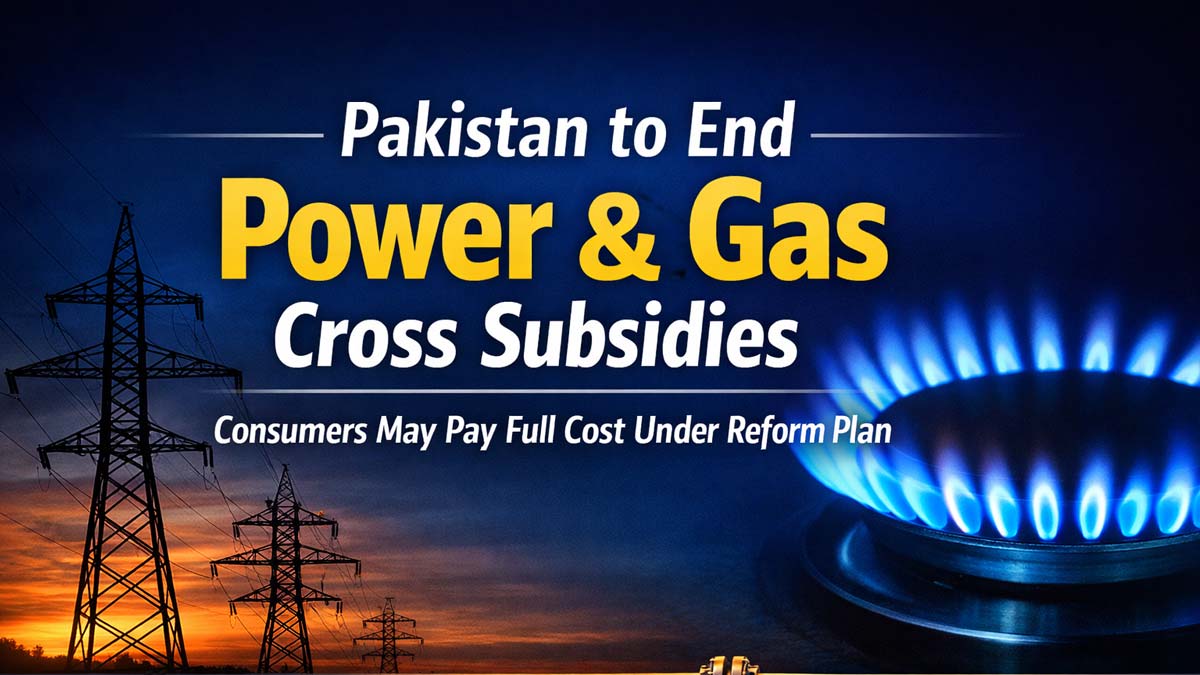
Pakistan has decided to gradually end cross subsidies in the power and gas sectors, with plans to charge consumers the full cost of electricity and gas in the future. Under the new framework, only low-income households will receive targeted support through the Benazir Income Support Programme (BISP).
According to officials, the Power Division has prepared a detailed subsidy reform plan. The government will brief the International Monetary Fund (IMF) on recent tariff restructuring and the roadmap for reducing blanket subsidies.
Sources said the government has started collecting data in coordination with BISP to identify eligible households. In the future, subsidies will be limited to budgeted allocations for deserving consumers only.
Officials stressed that the burden of cross subsidies — where certain consumer groups pay higher tariffs to support others — will be removed. As a result, most consumers will pay the actual cost of electricity.
The same approach will be applied to the gas sector. Authorities plan to phase out cross subsidies, which currently amount to around Rs225 billion. The proposal is expected to be incorporated into the upcoming federal budget.
Officials believe the reforms will improve financial sustainability in the energy sector and reduce distortions in pricing.
Meanwhile, an IMF review mission is scheduled to visit Pakistan on February 25 for the third economic review and is expected to stay for about two weeks.
During the visit, the delegation will assess economic performance between July and December 2025. It will also review progress on tax reforms, energy sector restructuring, monetary policy, and foreign exchange reserves.
Government officials will provide detailed briefings on policy measures and compliance with programme targets.