
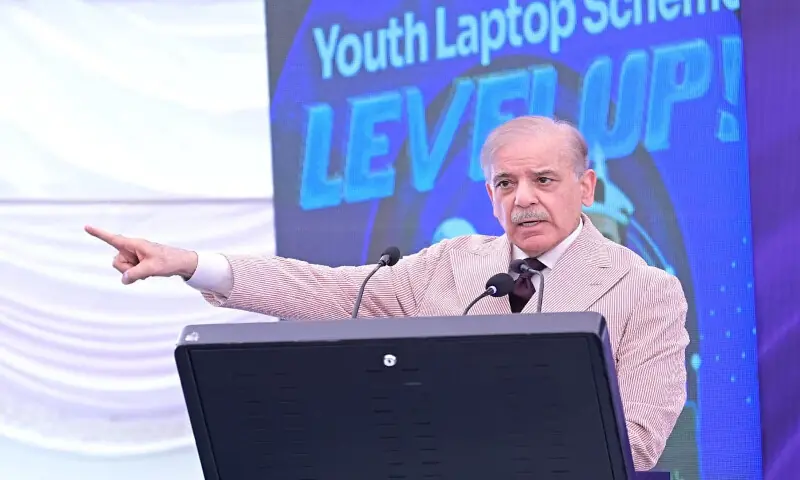
Prime Minister Shehbaz Sharif has launched major development projects in Gilgit-Baltistan, focusing on energy, education, and youth empowerment during his visit to the region. The development projects in Gilgit-Baltistan aim to improve living standards and reduce long-standing gaps in infrastructure and basic services.
Speaking at a ceremony in Gilgit, the prime minister said the development projects in Gilgit-Baltistan reflect the government’s commitment to equal progress across all parts of Pakistan. He stressed that true national development is not possible without uplifting remote and mountainous regions like Gilgit-Baltistan and Azad Jammu and Kashmir.
He inaugurated a 100-megawatt solar power project and also launched the distribution of free solar panels for households and businesses. According to him, over 50,000 people applied, and 15,000 beneficiaries were selected through a transparent digital system. These steps are part of wider development projects in Gilgit-Baltistan designed to tackle energy shortages, especially during harsh winters.
The prime minister also announced new education reforms, including the establishment of four Daanish Schools in different districts of the region. These schools will provide modern education, free meals, and boarding facilities to children from low-income families. He said girls will receive completely free education under this initiative.
In addition, PM Shehbaz inaugurated the second phase of the Safe City project in Gilgit and announced a similar project for Skardu to improve security using modern technology. He also distributed laptops to talented students and handed over business and agriculture loan cheques to young entrepreneurs to support financial independence.
Officials said these development projects in Gilgit-Baltistan also include large-scale solar installations and energy upgrades that will benefit over a million people. The government believes these steps will improve electricity supply, education access, and job opportunities in the region.
The prime minister said all selections under these schemes were made strictly on merit, without any political influence, and praised the youth of Gilgit-Baltistan for their talent and resilience.