
Khyber Pakhtunkhwa (KP) is facing two crises at once. One is a long-running militant threat that keeps claiming soldiers, police officers and civilians. The other is a political standoff between the federal government and the PTI-led provincial administration. Now the two have merged into a single question: should the Centre impose an emergency in the province?
Where things stand
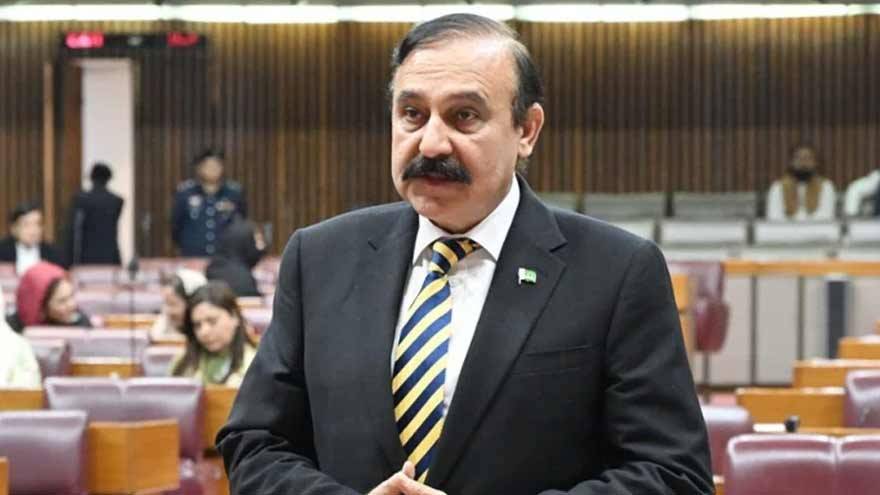
Parliamentary Affairs Minister Tariq Fazal Chaudhry said the federal government was “seriously” considering an emergency because of the worsening security situation. He framed the move as a response to the growing terrorist threat rather than a political decision, with Article 232 under consideration. Prime Minister Shehbaz Sharif then chaired a consultative meeting where the options discussed included Articles 232 and 234 of the Constitution.
As of October 1, however, the government had decided against immediately imposing an emergency or governor’s rule, and chose to give PTI another chance to reconsider its October 4 march. The decision is on hold, not off the table.
The case for an emergency
1. The state’s first duty is security. Supporters argue that when attacks on security personnel and civilians keep happening, the Constitution’s emergency provisions exist for exactly this situation. PPP’s Nayyar Hussain Bukhari described the law and order situation as deeply concerning, with security personnel and civilians continuing to lose their lives in frequent terrorist attacks.
2. Coordination between the Centre and the province has broken down. Rana Sanaullah has alleged that the KP government is failing to fulfil its constitutional responsibilities on law and order and counterterrorism, and is creating obstacles for federal law-enforcement agencies. If that is accurate, a single chain of command might make operations more effective.
3. A mass march adds risk. The KP governor has argued that the province cannot afford a long march in the prevailing security situation. Large gatherings are soft targets, and security forces are already stretched.
The case against
1. The timing looks political. Critics note that the emergency talk has intensified just as the PTI’s march demanding Imran Khan’s release approaches. Whatever the stated intention, the public may read an emergency as a tool to neutralise an opposition-run province.
2. Terrorism is not caused only by provincial governance. The provincial government’s position is that federal policies share the blame for the deterioration. Many analysts add that security policy, intelligence and military operations are largely controlled by federal institutions. Removing an elected government does not automatically fix that.
3. Democratic and federal costs are high. Suspending or sidelining an elected provincial government can deepen alienation in a region that already feels it bears the heaviest cost of the fight against militancy. Emergency rule has also sometimes outlasted its stated purpose in Pakistan’s history.
4. Dialogue has not been exhausted. PTI chairman Barrister Gohar Ali Khan has insisted that the October 4 march will be peaceful and political, and urged the government to avoid both governor’s rule and an emergency. Bukhari said PPP believes that national challenges can only be resolved through meaningful political engagement. Backchannel contacts reportedly exist, which suggests a negotiated route is still open.
The constitutional question
Emergency provisions are not a blank cheque. Articles 232 and 234 are meant for grave situations such as internal disturbance beyond a province’s ability to control, or a breakdown of constitutional machinery. They come with parliamentary and procedural safeguards. The legal test is not “is the situation bad?” but “has the provincial government actually lost the ability to govern?” Courts and political parties would scrutinise that claim closely.
What would a sound decision need?
Whichever way it goes, a defensible decision probably needs:
- Evidence of failure, not just rhetoric. The federal government should present specific data on the security collapse and on any non-cooperation.
- Proportionality. Narrower measures, such as joint security coordination or targeted operations, may address the threat without removing an elected government.
- Cross-party consensus. A step this serious carries more legitimacy if allies such as the PPP, and ideally the opposition, are brought on board.
- A clear exit plan and time limit. Emergency measures should have defined objectives and an end date.
Both sides have a serious point. The security threat in KP is real and deadly, and the state cannot ignore it. But an emergency in a province governed by the main opposition, announced amid a political confrontation, carries a real risk of being seen as political, and of deepening the very grievances that militancy exploits. The key question is whether the provincial government has truly lost the capacity to govern, or whether the two governments are failing to cooperate. That determination, and the pull between security and democracy, will decide whether an emergency is a necessary remedy or a costly mistake.