
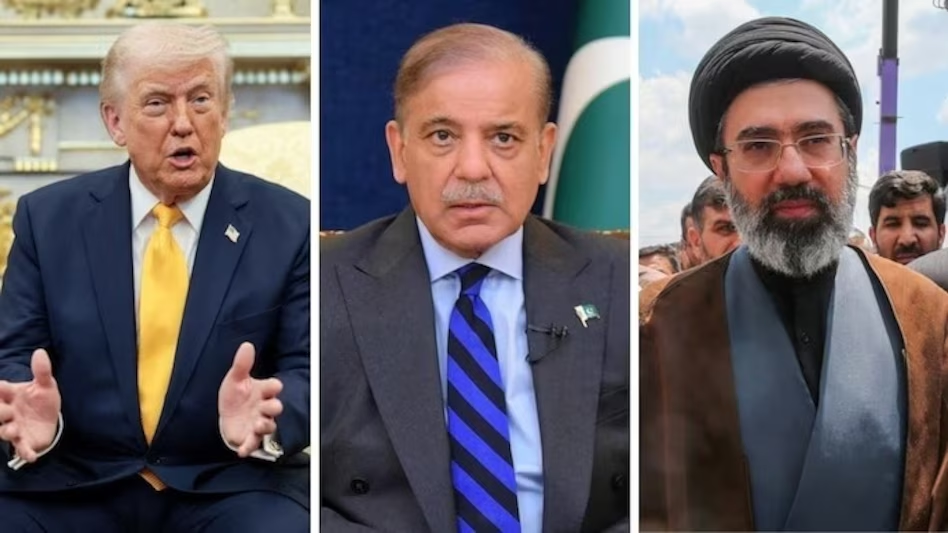
What are the key issues in US-Iran talks in Pakistan as high-level delegations meet in Islamabad for crucial negotiations? The discussions come at a sensitive time as both sides try to build on a fragile ceasefire.
Hosted by Pakistan, the talks bring together the United States and Iran with competing proposals on the table. Iran has presented a 10-point framework, while the United States has introduced a 15-point plan. Although both sides are engaged in dialogue, major differences continue to create tension.
What are the key issues in US-Iran talks in Pakistan? The most important topic is Iran’s nuclear programme. The United States is demanding strict limits on uranium enrichment and strong international monitoring to prevent the development of nuclear weapons.
Iran, however, insists on its right to continue peaceful nuclear activities. Tehran considers uranium enrichment a sovereign right and strongly opposes external restrictions on its program.
Another major issue in US-Iran talks in Pakistan is economic sanctions. Iran is calling for the immediate lifting of all sanctions and the release of frozen assets abroad. The US, on the other hand, supports a phased approach, linking sanctions relief to verified compliance by Iran.
The Strait of Hormuz is also a key point of disagreement. Iran wants its strategic role over the waterway officially recognized, while the United States insists on free and secure international shipping routes due to global energy needs.
Regional influence adds further complexity. The US is pushing Iran to end support for allied armed groups in the Middle East. Iran is demanding an end to military operations against those groups and broader regional de-escalation.
Security concerns remain central, with Iran seeking the withdrawal of US forces and guarantees of non-aggression. The United States has shown no indication of reducing its military presence in the region.
The ballistic missile programme is another contentious issue. The US wants limits on Iran’s missile development, while Iran views it as essential for its defense and rejects outside interference.
Both sides have also raised accountability concerns, including compensation for conflict-related damage and responsibility for attacks in the region.
As the ceasefire deadline approaches, officials say progress will likely come in phases. Confidence-building measures are expected first, with continued dialogue possibly extending the ceasefire.