
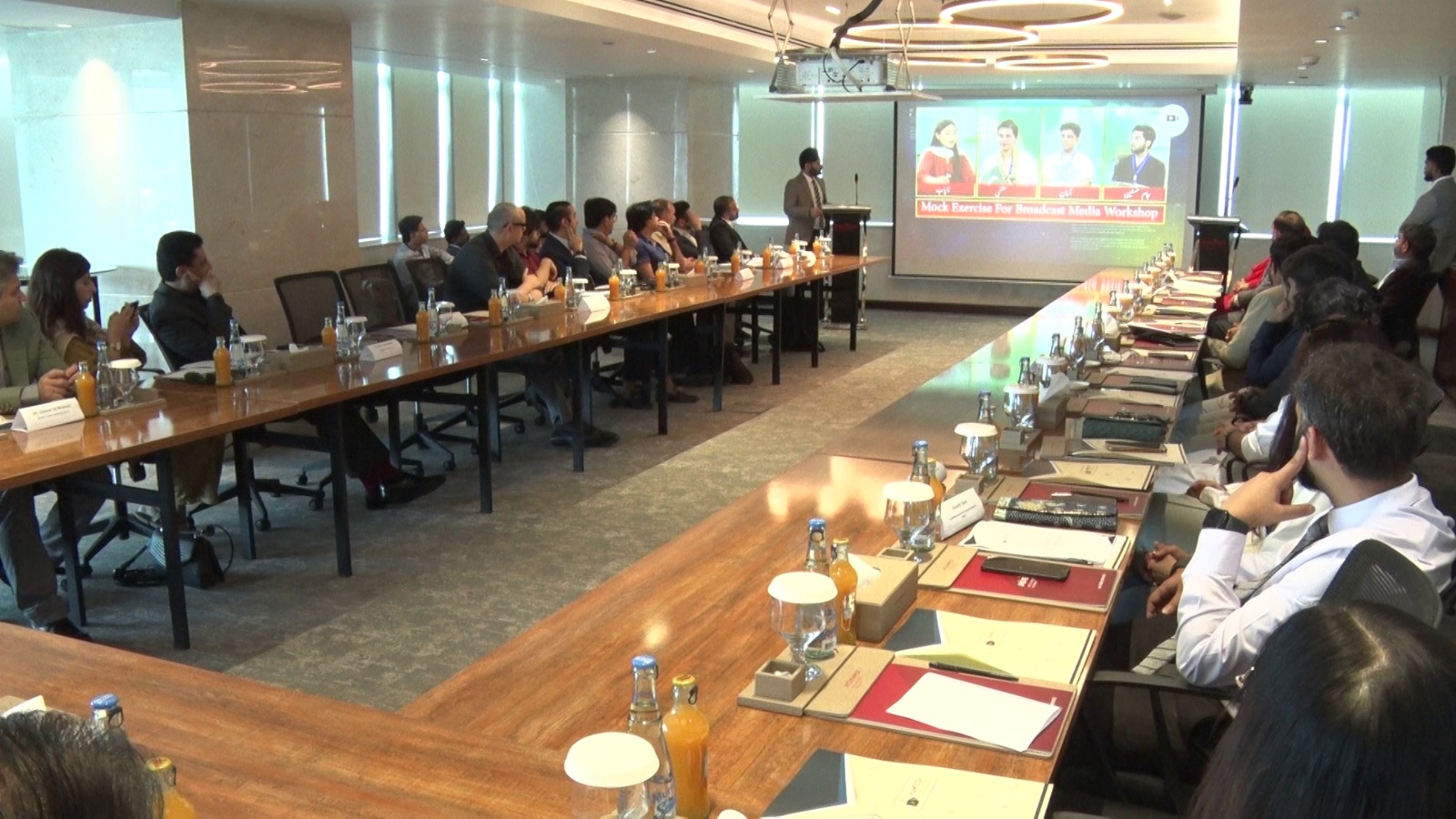
Islamabad’s Movenpick Hotel hosted a landmark gathering on Sunday as the newly formed Academia to Media Council held its inaugural symposium, bringing together leading universities, media houses, government officials and industry figures from across Pakistan.
The event marked the official debut of the Academia to Media Council, an initiative launched under the umbrella of the Khyber Academy for Media Technologies. Khudmukhtar Sawi, a welfare organization, served as the development partner, while the Movenpick Hotel came on board as venue partner. The National College of Sciences and Business Administration also extended its support to the proceedings.
At its core, the council was created to close the long-standing divide between how media professionals are trained in classrooms and what the broadcasting industry actually demands from new entrants.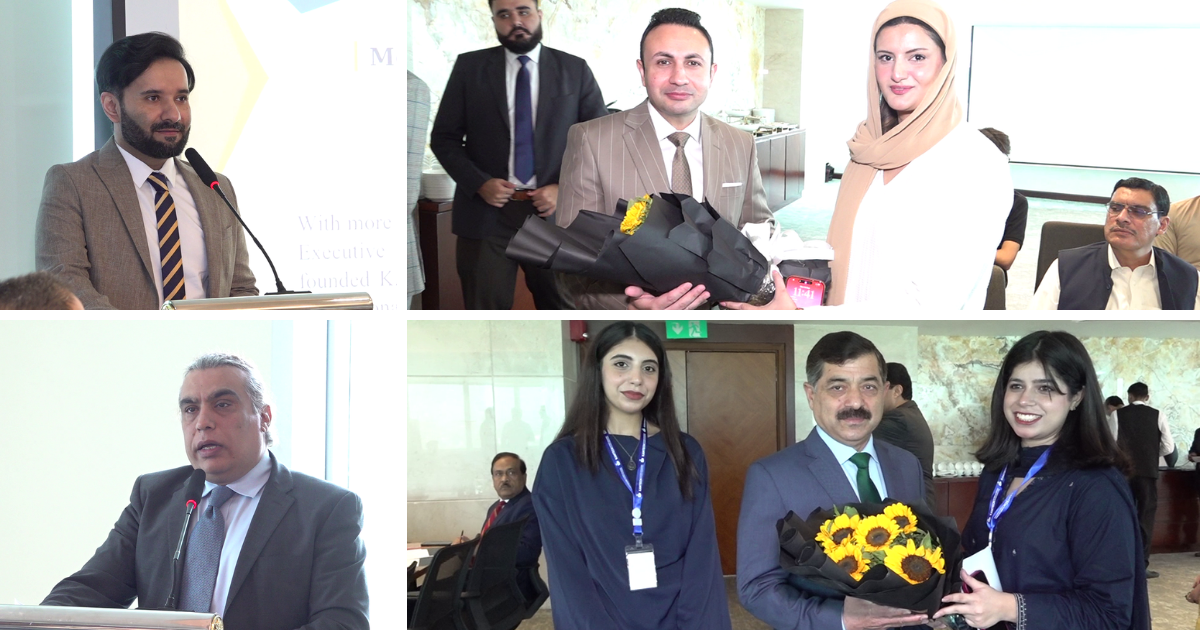
A Morning of Dialogue on Media Education Reform
Proceedings began at 10 a.m. with opening remarks from KamTech founder Kaiwan Hamid Raja and co-founder Maryam Kaiwan, who welcomed attendees and outlined the goals behind the new platform. A short documentary tracing KamTech’s growth and future plans followed the welcome address.
The heart of the symposium was a series of four sector-based panel discussions, each tackling a different piece of the media training puzzle.
Academics opened the conversation by examining how media curricula could be modernized, how students could be equipped with globally competitive skills, and how assessment methods might better mirror real industry standards.
Representatives from policy and development organizations then took the floor, focusing on how vocational training could be more closely tied to actual job placement, and how a demand-driven network of media skills could be built for Pakistan’s youth.
Government officials used their session to address gaps in awareness, accessibility and overall impact within the country’s media training sector, while industry representatives closed out the panels by pointing to specific skill shortages among fresh graduates and the factors that most influence hiring decisions today.
Wide Participation from Academia and Industry
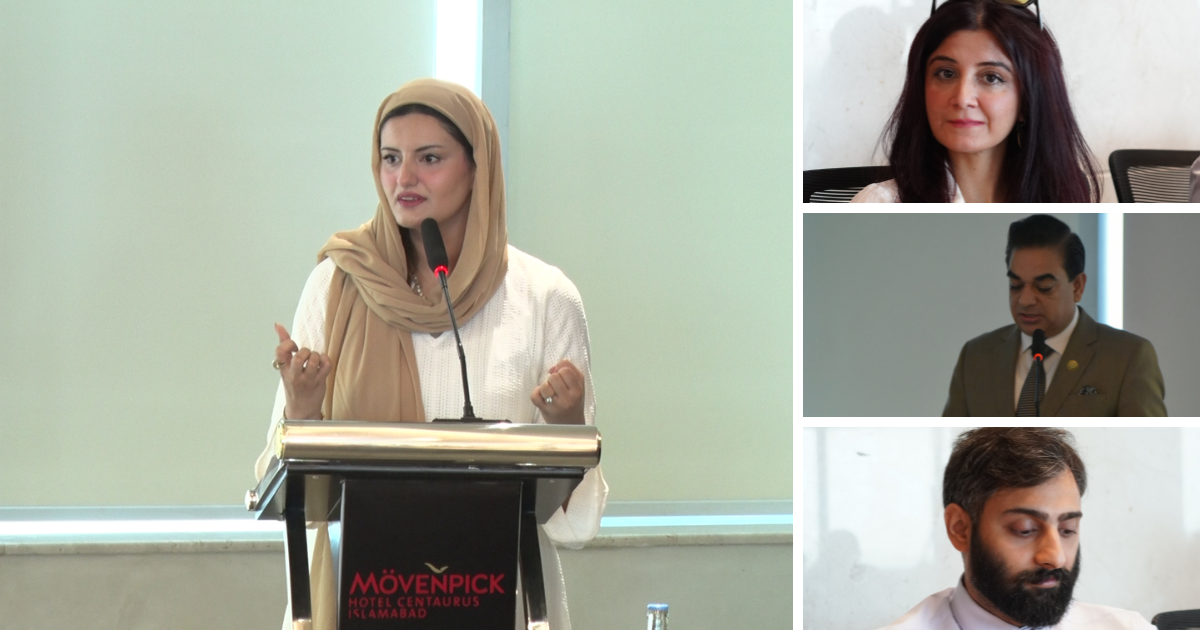
Representatives from a wide range of organizations and academic institutions attended the ATOM Symposium, including CARE Pvt Ltd, the Pakistan Telecommunication Company Limited (PTCL), Murree Brewery, the Pakistan Television Corporation (PTV), the Pakistan Global Alumni Network (PGAN), Nayatel, the National University of Modern Languages (NUML), Iqra University, the Institute for Strategic Studies, Research and Analysis (ISSRA) at the National Defence University, the National University of Sciences and Technology (NUST), Fatima Jinnah Women University (FJWU), the International Islamic University Islamabad (IIUI), Quaid-i-Azam University (QAU), the Sir Syed CASE Institute of Technology (CASE IT), SZABIST Islamabad, the Youth Empowerment Program (YEP), Kasb-e-Kamal, the Pakistan Observer, the National Incubation Center Islamabad (NIC), the Pakistan Electronic Media Regulatory Authority (PEMRA), The Millennium Universal College Islamabad (TMUC), the Islamabad Chamber of Commerce & Industry (ICCI), Bahria University (BU), Air University, and Riphah International University. The diverse presence of these institutions reflected the symposium’s broad appeal across academia, media, telecommunications, tourism, and the public and private sectors.
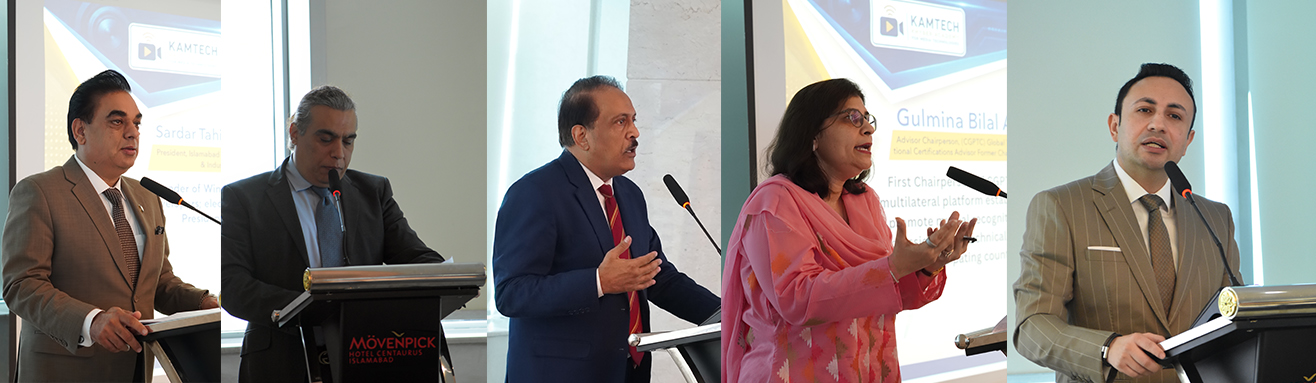
Mahmood, President of the Islamabad Chamber of Commerce and Industry; Sardar Yasir Ilyas, the Prime Minister’s Advisor on Tourism; the CEO of Movenpick Hotel under the Centaurus Group; Brigadier (Retd.) Masroor Ahmed, Director of Defence and Strategic Studies at ISSRA; and Muhammad Tahir, Executive Director General of the Pakistan Electronic Media Regulatory Authority, attended as special guests. Major General (Retd.) Shahid Mahmood Kiani, HI(M) Rector of the National University of Modern Languages was also present at the occasion.
Closing the Loop Between Classrooms and Newsrooms
The symposium concluded with a closing address from the chief guest, followed by a group photograph, high tea and a networking session for attendees to connect across sectors.
Organizers described the event as more than a one-off gathering, calling it the foundation for an ongoing, structured relationship between education, government, media and industry. The stated goal of the Academia to Media Council is to gradually align Pakistan’s media education system with international standards.
Observers in the sector note that platforms of this kind could play a meaningful role in narrowing the persistent gap between theoretical media education and the practical training newsrooms and broadcasters actually require.