
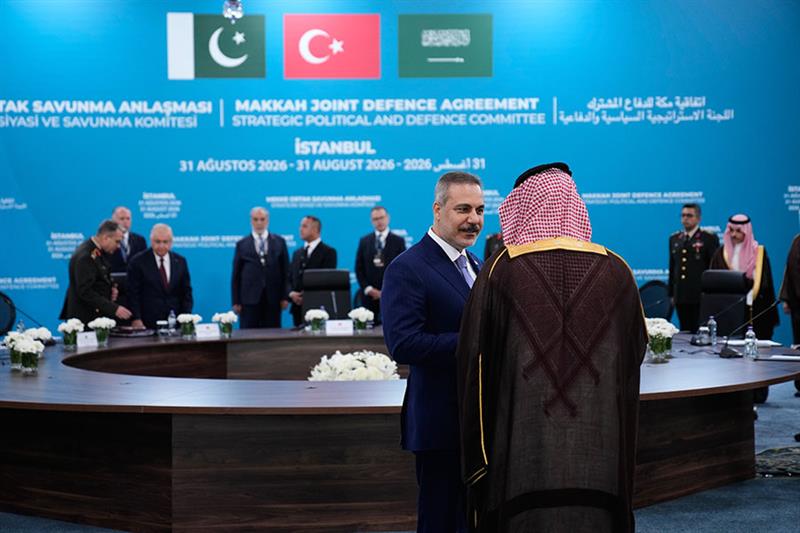

Islamabad will host a Makkah Defence Alliance meeting today, bringing together senior officials from Pakistan, Saudi Arabia and Turkiye. The apex committee of the three-nation alliance is expected to discuss the conflict between Saudi Arabia and the Houthis in Yemen.

The government has declared a local holiday in the Islamabad Capital Territory and Rawalpindi for the day. Essential services will stay open. These include the Metropolitan Corporation Islamabad, the Capital Development Authority, the ICT administration, Islamabad Police, Islamabad Electric Supply Company, Sui Northern Gas Pipelines Limited and hospitals.
Pakistan, Saudi Arabia and Turkiye signed the pact in August. Under the agreement, the three Muslim nations promised to help each other if any of them comes under attack.
Defence Minister Khawaja Asif said on Thursday that the defence and foreign ministers of all three countries would attend. He described the “continuous turmoil south of Saudi Arabia” as an important agenda item.
Asif said the pact makes its position clear. “Any threat to Saudi Arabia is a threat to Pakistan and Turkiye,” he said on Wednesday. He also praised Riyadh’s handling of the conflict with the Houthis, who control large areas of Yemen, including the capital, Sanaa.
Saudi Arabia has faced repeated attacks from the Houthis since fighting in Yemen’s civil war intensified in July. The group has targeted cities, oil facilities and shipping. The attacks came as the wider Middle East war spread. That war began in February with US-Israeli strikes on Iran and has since pulled in several countries in the region.
The defence minister said the alliance is still at a “nascent stage”. He said members need to meet often to shape its direction. The goal, he added, is to have everything in place within the next couple of months.
Asif declined to say how the alliance would respond if Iran attacked Saudi Arabia directly. He did point to Israel as a possible threat to regional countries. “The possibility of some conflict, or aggression from the Israeli side exists, so we need to close our ranks,” he said.
Pakistan also helped broker a June accord that briefly stopped fighting between the United States and Iran. The deal set out a plan to reopen the Strait of Hormuz and begin talks on Iran’s nuclear programme. The truce later collapsed, and Washington and Tehran each accused the other of breaking it. Qatar and Pakistan have since led months of shuttle diplomacy to revive the ceasefire.
Asif said Pakistan has played a “very, very constructive role” between the two sides. He warned that the mediation is still fragile and that peace has not taken hold the way people had hoped.