
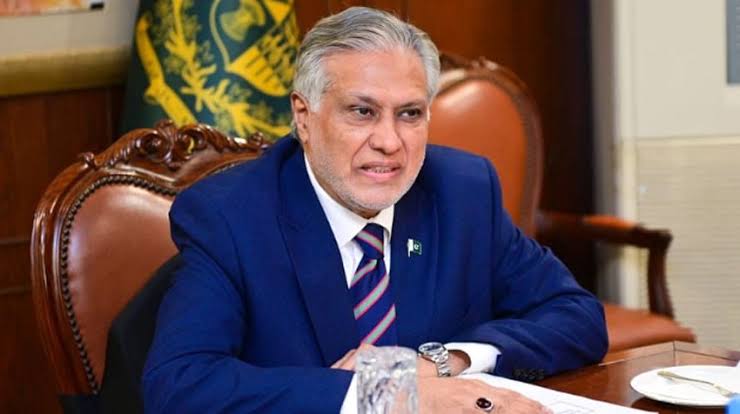
Pakistan does not recognise the Taliban government in Afghanistan, Deputy Prime Minister and Foreign Minister Ishaq Dar has said, clarifying Islamabad’s position on relations with Kabul.
Speaking at a media briefing alongside Information Minister Attaullah Tarar following the Economic Cooperation Organisation (ECO) meeting, Dar said Afghanistan’s membership in the ECO Council remains suspended. He added that organisers displayed Afghanistan’s former national flag during the recent conference.
Dar said Pakistan had allowed humanitarian cargo containers to cross the border despite the closure of the Pakistan-Afghanistan border.
He also said he held bilateral meetings with representatives of four countries during the ECO gathering, including Iran’s foreign minister. Their discussions focused on the latest regional developments.
According to Dar, Iran had conveyed a message, but Pakistan had not yet received a response from the United States.
He said Pakistan would lead the ECO for the next two years and remained committed to implementing the organisation’s charter. During the first year, Islamabad will focus on improving connectivity among regional countries.
Dar reiterated that Pakistan wants all disputes to be resolved peacefully through dialogue, stressing that regional peace remains essential for security and stability.
Addressing the 30th meeting of the ECO Council of Ministers, he said Pakistan wants to see Afghanistan become a peaceful, prosperous and stable country that plays a constructive role in the region and maintains good relations with all its neighbours.
He urged Afghan authorities to address the legitimate security concerns of neighbouring countries to achieve meaningful progress in bilateral relations.
Dar said regional cooperation was essential for promoting prosperity, peace and stability. He stressed that such cooperation should rest on sovereign equality, non-interference, mutual respect and shared interests.
He also noted that geopolitical uncertainty, economic pressures and rapid technological changes had made regional cooperation more important than ever.
Highlighting the region’s strategic location and economic potential, Dar called for efficient transport corridors, simpler border procedures and effective arrangements to facilitate trade and business activities among ECO member states.