
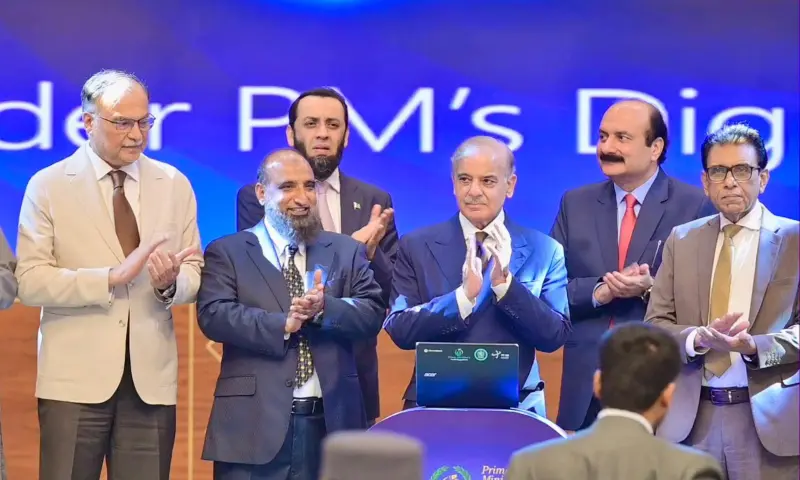
ISLAMABAD: Prime Minister Shehbaz Sharif has launched the PM Youth Chromebook Scheme, announcing plans to distribute 500,000 refurbished Chromebooks and internet devices to students across Pakistan over two years. The initiative aims to improve access to digital learning and equip young people with the technological resources needed for modern education.
The announcement was made during a ceremony in Islamabad on Sunday, where the prime minister also handed over laptops and internet devices to high-performing Grade 9 students and students enrolled in seminaries.
Addressing the event, Shehbaz Sharif described young people as one of Pakistan’s most valuable national assets. He said the government was working to empower students by expanding their access to technology, knowledge and educational opportunities.
The initiative is part of the government’s broader effort to strengthen digital education and help students develop the skills required to meet the challenges of an increasingly technology-driven world.
PM Youth Chromebook Scheme Targets 500,000 Students
The newly launched PM Youth Chromebook Scheme will provide 500,000 refurbished Chromebooks and internet devices to students over a two-year period, according to the announcement.
Speaking at the launch ceremony, Prime Minister Shehbaz Sharif compared the initiative with the laptop distribution programme previously carried out by the Pakistan Muslim League-Nawaz (PML-N).
“In the past, the Pakistan Muslim League-Nawaz distributed 600,00 laptops in 10 years. Now, 500,000 Chromebooks will be distributed in two years,” he said.
The prime minister used the comparison to highlight the planned scale and pace of the new distribution programme. The initiative is intended to extend access to digital tools that can support students in their studies and help them engage with modern educational resources.
By providing Chromebooks and internet devices, the government aims to reduce barriers to technology-based learning and create more opportunities for young people to access educational material.
The announcement did not specify a detailed distribution schedule or eligibility criteria for all recipients.
Shehbaz Sharif Emphasises Equal Educational Opportunities
During his address, the prime minister stressed that a student’s ability and determination should not be limited by their financial circumstances.
He said talent and hard work could be found among people from all economic backgrounds, underscoring the need to ensure that deserving students have opportunities to succeed.
The government’s youth-focused initiatives, he added, are intended to help students gain the knowledge and skills necessary to compete in a rapidly changing world.
Access to digital devices can support research, online learning and the use of educational platforms. The proposed Chromebook distribution programme is expected to contribute to these goals by making technology more accessible to students across the country.
The prime minister’s remarks also highlighted the importance of creating an education system in which students can pursue their ambitions regardless of whether they come from wealthy or financially disadvantaged families.
Government Building 27 Danish Schools Across Pakistan
Alongside the digital education initiative, Shehbaz Sharif highlighted the construction of at least 27 Danish schools across Pakistan.
According to the prime minister, these institutions are being developed to provide high-quality educational facilities and services free of charge.
The schools are intended to expand access to education for students who might otherwise face financial or other barriers to attending well-equipped institutions.
The initiative complements the government’s wider focus on improving educational opportunities, particularly for deserving students. While the Chromebook scheme focuses on access to digital technology, the Danish school programme seeks to provide students with educational facilities and services without charging fees.
Together, the initiatives reflect the government’s stated emphasis on expanding access to education and giving young people more opportunities to develop their academic abilities.
Rana Mashhood Highlights Support for Digital Education
Before the prime minister delivered his address, Rana Mashhood, chairman of the Prime Minister’s Youth Programme, spoke about efforts to provide students with digital facilities.
Mashhood said the Tokyo Technology Care Foundation had taken practical steps towards providing digital facilities to 500,000 Pakistani students.
He also said overseas Pakistanis had regained confidence in the incumbent government and were interested in contributing to the country’s development.
According to Mashhood, the prime minister had taken practical measures to empower young people and improve access to opportunities.
His remarks highlighted the importance of cooperation and support in expanding access to technology and education for students across Pakistan.
Danish Schools Aim to Support Deserving Students
Mashhood also discussed the role of Danish schools in helping students from deserving backgrounds continue their education and access opportunities for advancement.
He said these institutions had enabled students to pursue their studies and improve their prospects.
The focus on educational access reflects a broader challenge facing Pakistan’s education sector: ensuring that students from different economic backgrounds can obtain the resources and facilities needed to succeed.
Initiatives such as the PM Youth Chromebook Scheme and the development of Danish schools are intended to address different aspects of that challenge, from access to digital learning tools to the availability of educational facilities.
Their impact will depend on implementation, the effective distribution of resources and students’ ability to make use of the opportunities provided.
What the PM Youth Chromebook Scheme Means for Students
The launch of the PM Youth Chromebook Scheme marks a new announcement in the government’s efforts to expand students’ access to digital technology.
The planned distribution of 500,000 refurbished Chromebooks and internet devices over two years could provide additional learning resources to students who have limited access to digital equipment.
For students, such devices can offer access to online educational content, research resources and technology-based learning opportunities. However, the extent of these benefits will also depend on internet availability, the suitability of the devices and the support available to students using them.
The government has also highlighted its commitment to broader educational opportunities through the construction of at least 27 Danish schools, which are intended to offer facilities and services free of charge.
Further details about the Chromebook scheme’s eligibility requirements, application procedures and distribution timeline were not provided in the announcement.
As the programme moves forward, students and parents will be looking for official guidance on how the devices will be allocated and when distribution will begin in different parts of the country.
For now, the government’s stated objective is clear: to expand access to digital learning, support young people’s development and create more opportunities for students across Pakistan.