
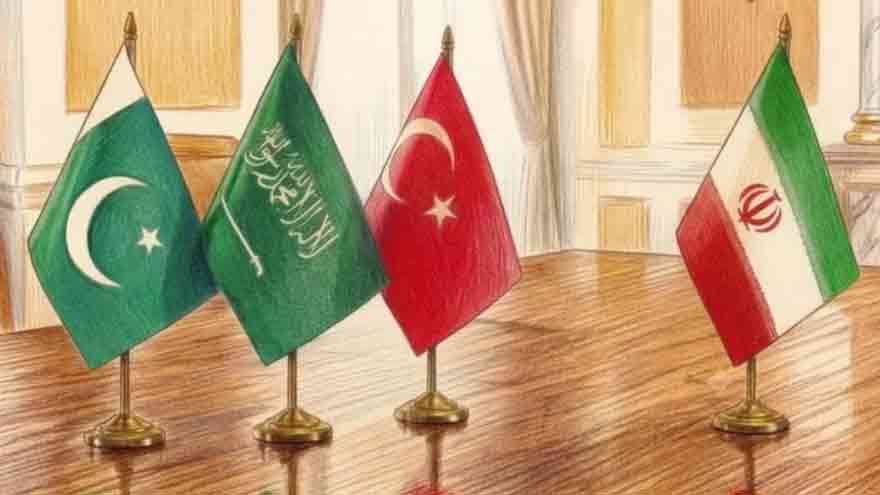
Senior representatives from Saudi Arabia, Pakistan and Turkey are expected to meet Iranian officials in Tehran on Monday to discuss regional security and defence coordination, according to two people familiar with the arrangements.
The proposed meeting comes as Saudi Arabia faces escalating attacks by Yemen’s Houthi movement amid a wider conflict involving Iran, the United States and Israel. The discussions could mark a significant diplomatic development, bringing Iranian officials into direct high-level contact with all three members of the emerging Saudi Pakistan Turkey defence partnership.
Saudi Defence Minister Prince Khalid bin Salman is expected to represent Riyadh at the talks. Senior officials from Pakistan and Turkey are also due to participate, although further details about the attendees and the proposed agenda have not been disclosed.
Saudi government officials and Pakistan’s military media wing did not respond to requests for comment from Reuters regarding the planned meeting.
Saudi Pakistan Turkey Defence Pact Draws Attention Amid Regional Crisis
The planned discussions would represent the first high-level engagement between Iran and all three countries in the defence bloc since Saudi Arabia came under mounting attacks attributed to Yemen’s Houthis, according to the report.
Saudi authorities intercepted another wave of missiles and drones on Sunday as hostilities involving the Houthi movement continued. The attacks have increased pressure on the kingdom to strengthen its security arrangements while managing the broader regional conflict.
The situation has also raised concerns about the growing reach of the confrontation involving Iran, the United States and Israel. Saudi Arabia, a US ally, has become increasingly exposed to the consequences of the wider conflict, making regional coordination a pressing security concern.
Against this backdrop, the proposed Tehran meeting could provide an opportunity for Saudi Arabia, Pakistan and Turkey to discuss regional stability directly with Iranian representatives. However, the precise objectives and expected outcomes of the talks have not yet been publicly confirmed.
Makkah Joint Defence Agreement Gains Strategic Importance
The three countries signed the Makkah Joint Defence Agreement in August, establishing a framework for closer military cooperation. Under the agreement, an armed attack against one member is treated as an attack against all three.
The arrangement represents a significant commitment to collective security among Saudi Arabia, Pakistan and Turkey. Its provisions are particularly relevant as the kingdom confronts continuing security threats and the wider Middle East conflict creates additional uncertainty.
According to the agreement’s first article, the participating countries are committed to employing “all necessary means” to address threats to one another’s territorial integrity, sovereignty and internationally recognised borders. The wording was contained in a copy of the agreement reviewed by Reuters.
The commitment establishes a common framework for responding to threats against member states. However, the specific military measures that might be taken in response to an attack would depend on the circumstances and the agreement’s implementation.
The planned discussions in Tehran could therefore carry significance beyond immediate diplomatic engagement, particularly if the participants address ways to prevent further escalation and improve regional security coordination.
Saudi Arabia and Allies Discuss Rapid Military Deployment
Earlier this month, ministers from the three countries held an emergency meeting in Riyadh to discuss the deteriorating security situation.
During that meeting, they agreed to ensure the “rapid deployment” of military forces and capabilities in Saudi Arabia. The decision reflected the urgency of the threats facing the kingdom as missile and drone attacks continued.
The commitment to accelerate the deployment of military resources highlights the practical security dimension of the Makkah Joint Defence Agreement. It also signals that the three governments are seeking to improve their ability to coordinate responses to potential threats.
Saudi Arabia’s latest interceptions of missiles and drones on Sunday further underscored the continuing risks. With fighting involving the Houthis remaining a source of instability, the kingdom faces the challenge of protecting its territory while avoiding a further expansion of the conflict.
For Pakistan and Turkey, participation in the defence framework places their security relationships with Saudi Arabia within a broader regional context. Their involvement in the planned Tehran discussions could also provide an avenue for diplomatic engagement at a time of heightened tensions.
Iran Talks Could Influence Wider Middle East Security
The expected meeting comes at a sensitive moment for regional diplomacy. The US-Israeli offensive against Iran has contributed to a wider confrontation, while attacks targeting Saudi Arabia have added another layer of instability.
Saudi Arabia’s position as a US ally makes the security situation particularly complicated. Riyadh must address threats to its territory while navigating a conflict with implications for relations among regional powers.
The proposed meeting could create an opportunity for discussions on regional coordination, although no specific agreements or diplomatic breakthroughs have been announced ahead of the talks.
The Saudi Pakistan Turkey defence partnership is also likely to attract attention because of its collective-defence provisions. The agreement establishes a commitment among the three countries to treat an armed attack on one member as an attack on all, making developments involving any member potentially relevant to the others.
Whether the Tehran discussions lead to concrete security measures, improved communication or further diplomatic engagement remains uncertain. The outcome will depend on the issues raised by the participating officials and the extent to which the countries can find common ground.
For now, the planned meeting highlights the growing importance of diplomacy and defence coordination as regional tensions continue to threaten stability across the Middle East.
What the Planned Tehran Meeting Means
The proposed talks bring together several important regional security considerations: Saudi Arabia’s exposure to Houthi attacks, the collective-defence commitment involving Pakistan and Turkey, and the wider confrontation surrounding Iran.
The three countries have already taken steps to strengthen military coordination through their agreement and the emergency meeting in Riyadh. Their expected engagement with Iranian officials would add a diplomatic dimension to those efforts.
However, the meeting’s final agenda, any decisions reached and the extent of subsequent cooperation remain unconfirmed. Until officials provide further details, the talks should be viewed as a planned high-level engagement rather than evidence of a new military arrangement or a confirmed change in regional policy.
The discussions nevertheless come at a critical time, when developments involving Saudi Arabia, Iran, Pakistan and Turkey could have wider implications for regional security and diplomatic relations.