
The US House of Representatives voted on Wednesday to halt U.S. military action against Iran, marking a major political challenge to President Donald Trump and his war strategy. The vote passed 215-208.
The resolution signals growing resistance in Congress to the ongoing conflict, which has now stretched over three months and reshaped political debate in Washington.
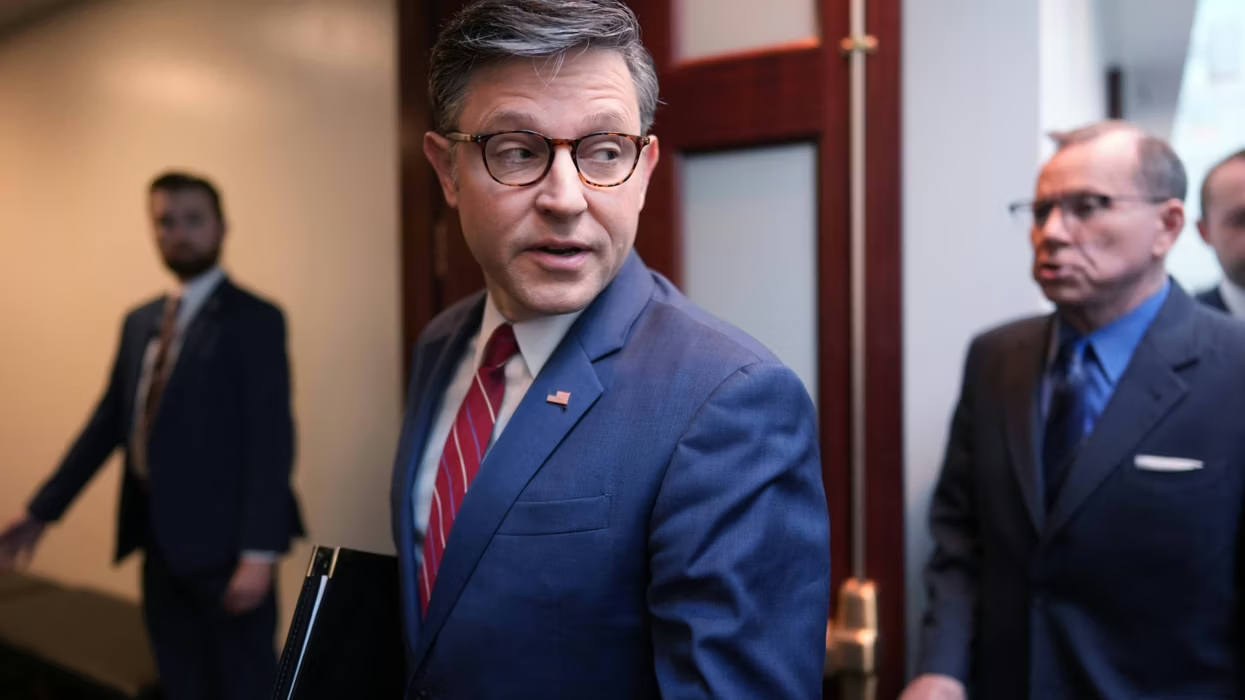
House Speaker Mike Johnson had previously tried to delay the vote, but opposition to the war continued to grow among lawmakers from both parties.
Democratic lawmaker Gregory Meeks, who led support for the resolution, said the conflict has placed heavy pressure on American families. He argued that the war has driven up fuel prices and increased the cost of living.
The vote saw a small number of Republicans joining Democrats, reflecting widening concern within Congress over the direction of the war policy. It is the fourth attempt by the House to limit U.S. military involvement against Iran.
While the measure does not immediately stop the conflict, it represents a symbolic and political rebuke of the administration’s approach. Any final restriction would still face major legal and constitutional hurdles.
The conflict began after U.S. strikes on Iran earlier this year and has continued despite a declared ceasefire in April. Tensions remain high as sporadic military exchanges continue between the two sides.
Secretary of State Marco Rubio warned lawmakers that limiting presidential war powers could weaken U.S. negotiating leverage, arguing it may discourage Iran from reaching a deal.
Congressional leaders are also considering additional measures related to U.S. military involvement in other global conflicts, including Ukraine and Lebanon, reflecting broader debate over America’s foreign policy direction.
The dispute highlights an ongoing constitutional question over war powers, with Congress asserting its authority to regulate military action while the president maintains constitutional powers as commander in chief.
If the Senate follows the House in supporting the resolution, it could set up a significant legal and political confrontation over who controls U.S. military engagement in Iran.