
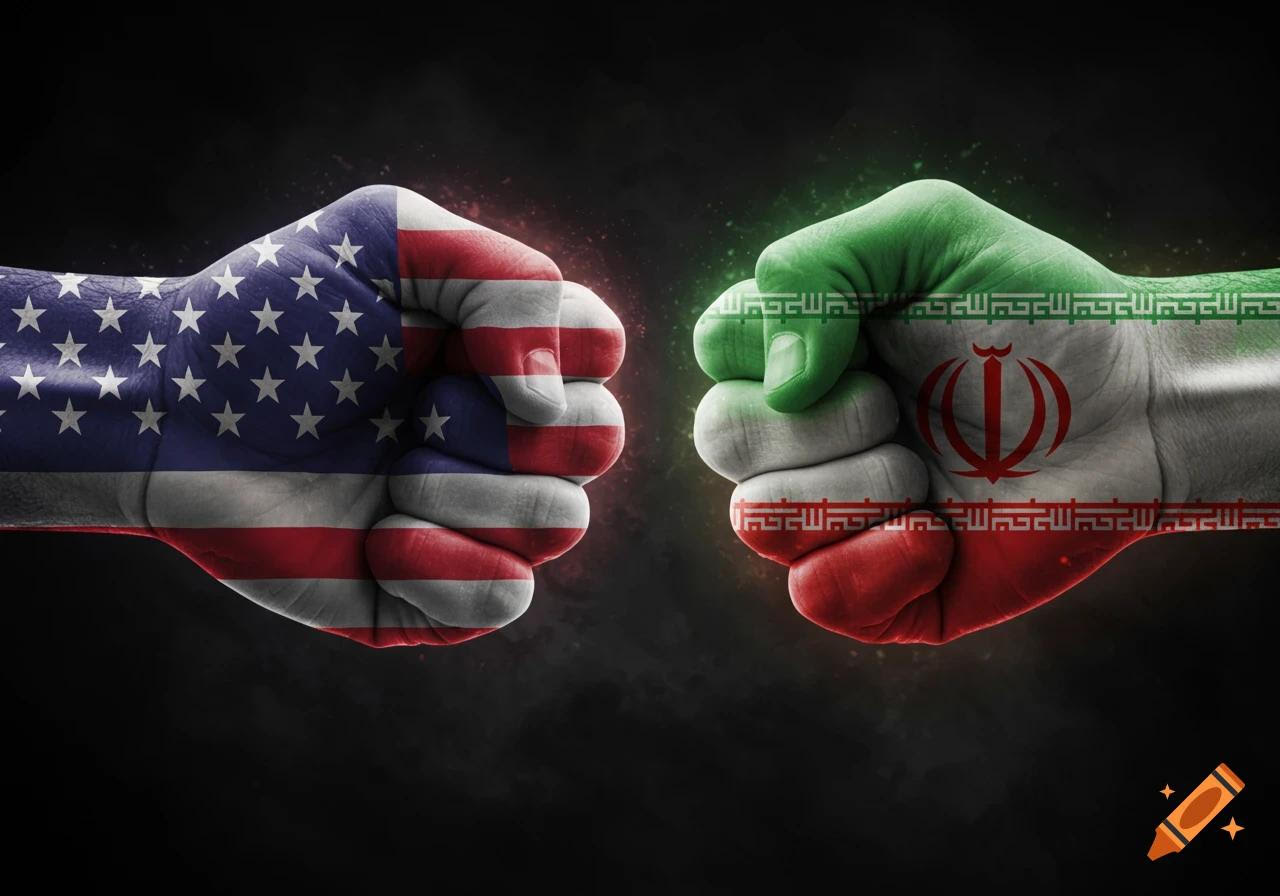
The US-Iran War intensified on Thursday as the United States and Iran exchanged fresh attacks for a second consecutive day, raising fears that a fragile ceasefire could collapse completely. President Donald Trump warned that Washington would launch additional strikes if Tehran failed to immediately agree to a peace deal.
The latest escalation follows the downing of a US Apache helicopter near the Strait of Hormuz earlier this week. The incident triggered a new round of military action between the two sides and increased tensions across the Middle East.
According to the US military, its latest operation targeted Iranian military surveillance systems, communication networks, and air defense sites. Washington described the strikes as a response to what it called Iran’s continued aggression.
Trump said the attacks could end soon if Iran agreed to a deal with the United States. However, he warned that heavy bombing would resume if Tehran refused to cooperate. The threat pushed oil prices higher as investors worried about further disruption in the region.
Iran’s Islamic Revolutionary Guard Corps said it responded by targeting US military facilities in Kuwait, Bahrain, and Jordan. Iranian officials claimed missile and drone attacks were launched against several American positions, including the US Navy’s Fifth Fleet headquarters in Bahrain. Regional air defense systems reportedly intercepted several incoming threats.
Tensions also remained high around the Strait of Hormuz. Iran warned that it could target vessels attempting to pass through the strategic waterway, while US Central Command rejected Iranian claims that the strait had been closed and said commercial shipping continued to move through the area.
Explosions were reported in several Iranian cities, including Bandar Abbas, Minab, Sirik, Kargan, Karaj, and Varamin. Iranian officials accused the United States of damaging civilian infrastructure, including water facilities serving local communities. The Pentagon did not immediately comment on the allegations.
US Defense Secretary Pete Hegseth said the military action was designed to strengthen Washington’s position in ongoing efforts to secure an end to the conflict. He expressed hope that Iran would choose diplomacy but indicated the United States was prepared to continue military operations if necessary.
Despite repeated claims from both sides that negotiations remain possible, no breakthrough has emerged. The conflict, now in its fourth month, has already caused thousands of deaths and disrupted global energy markets. Concerns over oil and gas supplies have increased as fighting continues around one of the world’s most important shipping routes.
Meanwhile, fighting also continued in Lebanon, where clashes between Israeli forces and Iran-backed Hezbollah militants added another layer of instability to the region. Tehran continues to demand an end to attacks in Lebanon, relief from sanctions, access to frozen assets, and recognition of its position regarding the Strait of Hormuz. The United States insists that any agreement must guarantee that Iran cannot develop a nuclear weapon and must allow free navigation through the strategic waterway.