
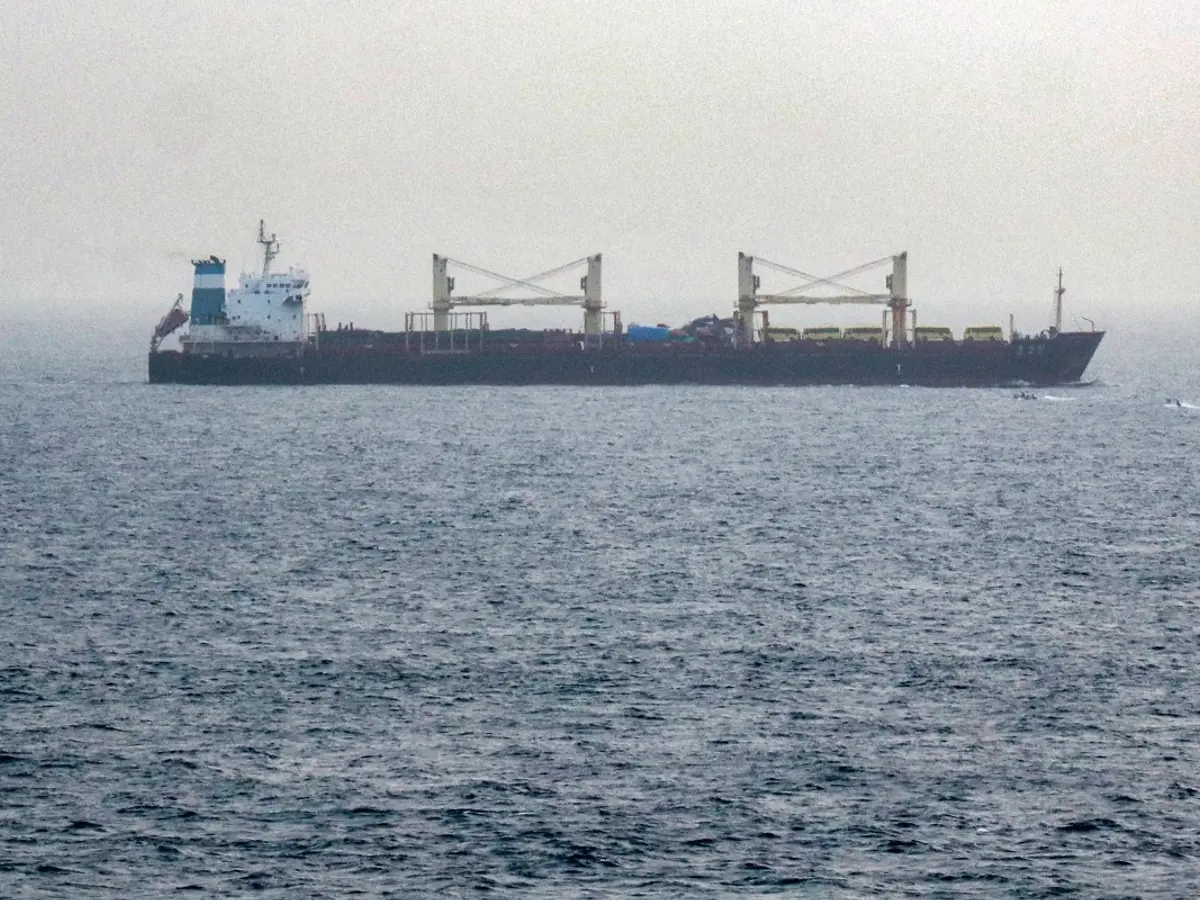
Three Pakistani citizens have lost their lives after Houthi forces struck a commercial ship in the Red Sea, Islamabad confirmed, as the country continues pushing for calm amid worsening Middle East tensions.
Deputy Prime Minister and Foreign Minister Ishaq Dar announced the fatalities on Wednesday, noting that a fourth Pakistani was wounded in the strike.
Pakistan Condemns the Red Sea Shipping Attack
Writing on social media platform X, Dar denounced the assault on what he described as a non-combatant merchant vessel. He said such strikes put civilian lives at risk, breach international law, and threaten navigational freedom, maritime stability, and the broader safety of commercial vessels moving through the Red Sea.
The foreign minister said Pakistani officials were coordinating with Saudi authorities and Yemen’s internationally recognised government to gather more details about how the attack unfolded.
Dar also revealed that he had instructed the Pakistani embassy in Riyadh to work with local officials to arrange the return of the victims’ remains to Pakistan and to secure medical and logistical support for the surviving injured citizen. He reiterated that the government would keep monitoring developments and stay engaged with relevant authorities in the region.
Background: Rising Tensions Around the Red Sea
This is not the first time Islamabad has raised alarm over Houthi activity. Last month, Pakistan’s Foreign Office publicly criticised repeated Houthi threats directed at Saudi Arabia and at commercial shipping lanes through the Red Sea, cautioning that such behaviour jeopardises both regional stability and international trade flows.
A Foreign Office statement issued on July 22 warned that these threats were eroding freedom of navigation, undermining the established maritime order, and putting global trade at risk.
One day afterward, Islamabad and Riyadh pledged closer cooperation to safeguard peace and keep maritime trade routes through the Red Sea functioning without disruption. That commitment emerged from a phone call between Prime Minister Shehbaz Sharif and Saudi Crown Prince Mohammed bin Salman, during which the prime minister sharply condemned Houthi strikes on Saudi oil tankers.
Shortly after, Pakistan joined Saudi Arabia and Turkiye in signing the Makkah joint defence pact, a mutual-security arrangement under which an attack on any one signatory would be treated as an attack on all three nations. Dar emphasised that the agreement is defensive by design, meant to foster regional peace, stability, and economic growth rather than escalate conflict.
Diplomatic Outreach Continues Amid Wider Regional Conflict
News of the latest Red Sea attack surfaced as Interior Minister Mohsin Naqvi was in Iran holding talks with President Masoud Pezeshkian and Foreign Minister Abbas Araghchi. Pakistan, alongside Qatar, has taken a leading mediating role in the broader Middle East conflict, a war that has claimed thousands of lives, primarily in Iran and Lebanon, since joint US-Israeli strikes on Iranian targets on February 28.
During the Tehran meeting, Naqvi delivered a personal message from Prime Minister Sharif and Field Marshal Asim Munir, Chief of Defence Forces and Chief of Army Staff, to President Pezeshkian. He also briefed Iranian officials on the details of the Makkah joint defence agreement, according to sources familiar with the discussions.
US and Houthi Forces Report Separate Incidents
Separately, both the United States and Houthi forces reported distinct shipping attacks on Tuesday, dimming hopes of a swift resolution to the wider regional war. Iranian officials reaffirmed that the Strait of Hormuz will remain closed until Washington meets Tehran’s demands.
The two incidents, one near the Gulf of Oman close to the strait, and another near the entrance to the Red Sea, struck two of the world’s most critical oil transit corridors, underlining how the conflict continues to threaten global energy supplies.
Still, Defence Minister Khawaja Asif offered a more optimistic outlook on Tuesday, telling Bloomberg News that Washington and Tehran appeared to be nearing “some sort” of agreement. Qatar, also involved in mediation efforts, said discussions on managing tensions around the Strait of Hormuz had reached an advanced stage.
Asif told Bloomberg that recent signals suggest momentum is building toward a potential peace arrangement, adding that developments over the past few days point toward the two sides edging closer to a deal.