
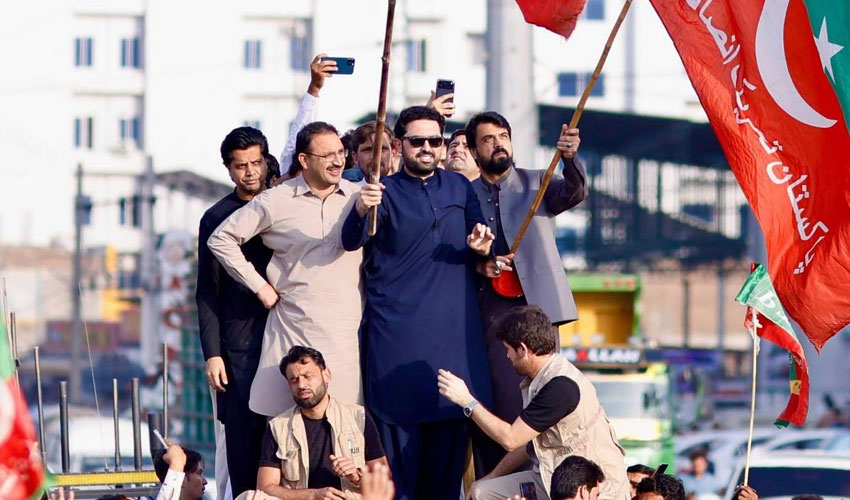
The alleged indifference of Pakistan Tehreek-e-Insaf (PTI) leaders towards the martyrdom of police personnel in Khyber Pakhtunkhwa has triggered sharp criticism, with questions being raised about the party leadership’s priorities as its political activities continue. The martyrdom of Station House Officer (SHO) Daud Khan and his gunman, Farhad, in Karak has intensified demands for political leaders to demonstrate solidarity with the families of those who sacrifice their lives in the line of duty.
While police personnel continue to face deadly security threats, critics argue that the PTI leadership should show greater sensitivity towards the suffering of the province’s people instead of allowing political rallies and demonstrations to dominate public attention.
PTI Long March Under Fire Over Alleged Indifference to Martyrs
According to Karak District Police Officer Imran Khan, personnel from Banda Daud Shah Police Station were conducting routine patrols near New Karpah, close to the Kohat-Karak boundary, when armed men opened fire on them.
The attack claimed the lives of SHO Daud Khan and his gunman, Farhad, while a passerby was injured. Police personnel subsequently reached the scene, cordoned off the area and launched a search operation to apprehend the attackers.
The incident has raised fresh concerns about security in Khyber Pakhtunkhwa. However, the controversy surrounding the PTI leadership has increasingly centred on what critics describe as an inadequate public response to the deaths of those tasked with protecting the province.
Political Rallies Continue as Families Mourn Police Martyrs
Critics have questioned the priorities of PTI leaders and participants in the party’s ongoing political activities, arguing that expressions of grief and solidarity with bereaved families should receive at least as much attention as political mobilisation.
According to the criticism circulating in political discourse, six individuals have been martyred in Khyber Pakhtunkhwa over three days, while five other deaths were reported on October 5. Critics have challenged PTI leaders to demonstrate solidarity by attending funeral prayers, visiting grieving families and publicly acknowledging the sacrifices of police personnel.
The central grievance is not simply that the PTI Long March is taking place. Rather, it is the perception that political activities are continuing without a sufficiently visible expression of compassion for those killed in the line of duty.
For a province confronting persistent security challenges, critics argue, leadership should be measured not only by the size of political gatherings but also by its response to tragedy.
Where Is the Compassion from PTI Leadership?
The martyrdom of SHO Daud Khan and Farhad has placed a difficult question before PTI’s political leadership: why should expressions of solidarity with fallen police personnel not be a prominent part of its public response?
Opponents contend that attending funeral prayers, offering condolences and visiting bereaved families are basic gestures of humanity that transcend political differences. They argue that even a brief, meaningful show of support could reassure grieving families that their sacrifices have not been forgotten amid the noise of political confrontation.
The criticism also extends to the PTI-led provincial government’s responsibility for public safety. Political opponents say the government must demonstrate that counterterrorism, police protection and support for affected families are central priorities rather than issues overshadowed by party politics.
At the same time, claims about the personal conduct of individual leaders, their attendance at funerals or their contact with the victims’ families should be verified before being presented as established facts.
PTI’s Political Priorities Face a Test of Humanity
The people of Khyber Pakhtunkhwa have endured years of insecurity, militant attacks and the loss of law enforcement personnel. Every such incident leaves families grieving and communities questioning whether enough is being done to protect those who stand on the front lines.
In this atmosphere, political leaders have a responsibility to respond with empathy, seriousness and a clear commitment to public safety. Critics argue that the PTI leadership risks appearing disconnected from ordinary citizens if its political messaging fails to adequately acknowledge the suffering caused by these attacks.
The debate is ultimately about more than a march or a political party. It is about whether public representatives can place human suffering above political rivalries and recognise the sacrifices of those who protect citizens.
SHO Daud Khan and Farhad deserve to be remembered for their service, while the injured passerby deserves attention and support. The authorities must pursue those responsible for the attack and strengthen measures to protect police personnel and the public.
For PTI leaders, the challenge is clear: political mobilisation may command headlines, but compassion during tragedy is a test of leadership. At a time when families are mourning their loved ones, critics argue that silence or an inadequate public response is not enough. The people of Khyber Pakhtunkhwa deserve visible solidarity, responsible governance and concrete action to prevent further bloodshed.