
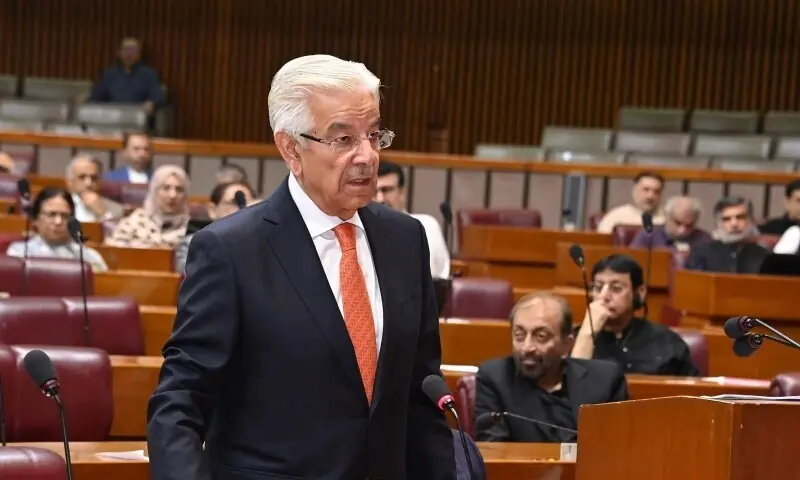
Defence Minister Khawaja Asif supports new provinces in Pakistan, saying the country could have as many as 12 administrative units if they are created on administrative grounds rather than ethnic, linguistic or political considerations.
Speaking to the media in Sialkot on Sunday, Asif said the proposal to create new provinces had been under discussion for the past two months. He said people across the country had expressed different views on the issue.
“If there is a proposal for 12 provinces, then make it 12, but they should not be created on the basis of language, ethnicity or political interests,” he said.
The defence minister called for smaller administrative units, arguing that Pakistan’s growing population required a more effective governance system to deliver public services.
He said provincial capitals such as Lahore, Karachi, Quetta and Peshawar should not retain all administrative powers. Instead, the government should transfer authority to smaller administrative units to improve service delivery.
Asif also questioned the distribution of financial resources, saying provincial governments controlled funds transferred by the federal government, even though these resources were ultimately meant for local government institutions.
He urged politicians to change their approach towards power and authority. Political leaders, he said, must recognise that power is a trust given to them by the people.
Referring to Pakistan’s administrative history, Asif recalled the One Unit scheme, under which the country’s provinces were merged into a single administrative unit before the arrangement was reversed.
He also cited Afghanistan as an example of administrative restructuring, noting that the number of its provinces had increased from around eight or 10 to more than 30.
Proposal for 12 provinces
Asif’s remarks come amid reports that a proposal to reorganise Pakistan into 12 provinces is under consideration. The reported plan also envisages a nationwide referendum before a possible 28th Constitutional Amendment.
According to a report published in National Press, the proposed arrangement could divide Punjab into four provinces, Khyber Pakhtunkhwa and Balochistan into three each, and Sindh into two.
Sources familiar with the proposal said the constitutional amendment could be considered in the first half of 2027, with preparatory work potentially beginning in the first quarter.
However, no final decision has been taken on provincial boundaries, administrative structures or the constitutional process.
The proposed restructuring aims to decentralise administrative authority, improve governance and ensure a more balanced distribution of development resources across the country.