
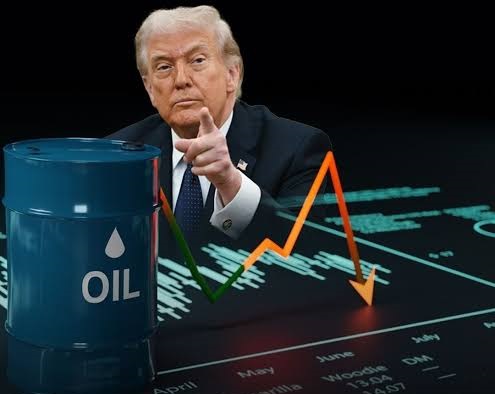
Oil prices declined on Monday after US President Donald Trump said further attacks on Iran were highly unlikely as talks between the two sides continued. However, reports of attacks on ships near the Strait of Hormuz kept concerns over global energy supplies alive.
At 0138 GMT, Brent crude futures fell 84 cents, or 0.85%, to $97.48 a barrel. US West Texas Intermediate (WTI) crude dropped 32 cents, or 0.35%, to $90.51.
Brent crude had fallen 17% last week, marking its steepest weekly decline since the COVID-19 pandemic. It was also the largest weekly drop in absolute terms in data compiled by LSEG since 1988.
Trump said new strikes on Iran were highly unlikely if the two countries reached a strong agreement. However, Iran has continued to threaten US and Israeli targets.
Markets are now watching whether the latest developments signal a lasting shift in the conflict, particularly as the United States approaches its midterm elections.
Analysts at JPMorgan said the global oil market was facing a supply surplus. The bank estimated that supplies exceeded demand by 1.1 million barrels per day in September and 1.4 million barrels per day in October. The surplus reflects recovering oil flows from the Middle East, higher production elsewhere and weaker demand.
Meanwhile, Iraq has reached an understanding with the United States to allow its oil exports to pass through the Strait of Hormuz using a shipping route near Oman. Iraq has suffered an estimated $60 billion in losses due to the war and disruptions to its oil exports.
The security situation in the region also remained tense. Yemen’s Houthi group claimed responsibility for an attack on Saudi Aramco offices in Riyadh. The attack reportedly shattered windows, but no casualties were reported.