
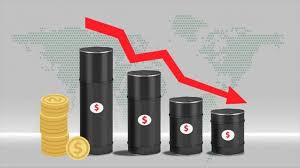
Oil prices fall in global markets after US President Donald Trump suggested that the war in the Middle East may end sooner than expected. His remarks helped calm fears about long-term disruption to global oil supplies.
Brent crude dropped by more than four percent on Tuesday to around $94.79 per barrel. US West Texas Intermediate crude also declined about four percent, trading near $90.96 per barrel. Both benchmarks had earlier slipped as much as eleven percent before recovering slightly.
The sharp movement came just a day after oil prices crossed $100 per barrel for the first time in more than three years. The sudden surge followed rising tensions in the Middle East as the conflict involving Iran expanded. Production cuts by Saudi Arabia and other oil producers also pushed prices higher and added pressure on the global energy market.
However, oil prices fall again after signs of possible diplomatic progress. Russian President Vladimir Putin reportedly held a phone call with Donald Trump and shared ideas aimed at reaching a quick settlement to the Iran conflict. The discussion eased fears that the war could drag on and disrupt global oil supply routes.
Trump also said in an interview that the campaign against Iran had progressed faster than expected. He noted that the conflict appeared close to completion and was moving ahead of his earlier estimate of four to five weeks.
Energy analysts say Trump’s comments helped cool the market after the earlier surge. Investors who had rushed to buy oil during the initial panic began to step back once they sensed the conflict might not last long.
Despite the drop, some experts believe the market may be reacting too quickly. They point out that Middle Eastern benchmark oil grades such as Murban and Dubai crude still trade above $100 per barrel. This suggests that underlying supply concerns have not fully disappeared.
Iran’s Islamic Revolutionary Guard Corps responded strongly to Trump’s remarks. Officials said Iran would decide when the war ends and warned that the country could block oil exports from the region if US and Israeli attacks continue.
Even with that warning, oil prices fall as traders focus on possible measures to stabilize the market. Reports suggest the United States may consider easing some sanctions on Russian oil to increase supply. Washington is also reviewing the option of releasing emergency crude reserves to control rising global prices.
At the same time, major economies are monitoring the situation closely. G7 countries said they are ready to take necessary steps if energy prices continue to surge, though they stopped short of announcing a release from strategic oil reserves.
Market analysts say the key factor behind why oil prices fall is the belief that oil supply routes will remain open. Once traders realized that shipments could still reach global markets, the panic buying that pushed prices above $100 began to fade.
For now, energy markets remain highly sensitive to developments in the Middle East. Any escalation in the conflict or disruption to shipping routes could quickly push prices higher again. But as long as hopes for a short war remain alive, oil prices fall could continue to shape trading in the coming days.