
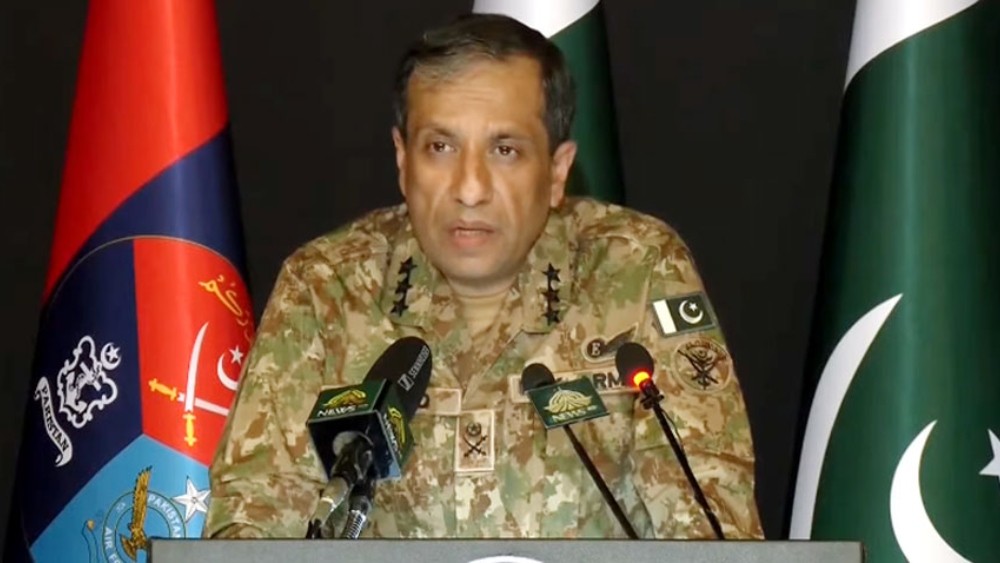
Pakistan’s armed forces have pushed back against India’s account of Operation Sindoor, calling a recently released documentary about the operation a distorted retelling designed to mask a military setback.
The Inter-Services Public Relations (ISPR), the media wing of Pakistan’s military, issued a statement on Monday arguing that India has spent more than a year avoiding an honest reckoning with what happened during Marka-e-Haq, opting instead to present events in a way that suits its own narrative.
According to ISPR, the film relies on dramatized interviews, emotional voiceovers, and stylized reenactments reminiscent of Bollywood productions rather than a factual military record. The statement described the documentary as swinging between “tragedy and comedy” due to what it called a lack of seriousness and factual grounding.
Contradictions in the Operation Sindoor Documentary Timeline
ISPR pointed to what it described as inconsistencies at the heart of the documentary’s storyline. The film reportedly draws a connection between a speech given by Pakistan’s Chief of Army Staff on April 16, 2025, and the attack in Pahalgam six days later, a link ISPR dismissed as a fabricated conspiracy theory.
The statement also flagged a timeline problem: India has said the individuals allegedly behind the Pahalgam attack were tracked down and killed on July 28, 2025, roughly 82 days after Operation Sindoor took place. Yet the documentary frames the operation itself as retaliation for Pahalgam. ISPR questioned who, then, India believed it was punishing when it launched strikes on May 7.
ISPR also challenged India’s characterization of the operation as a complete success. During the conflict, it said, Pakistani forces intercepted Indian aggression and brought down eight military aircraft. In response, Pakistan carried out Operation Bunyanum Marsoos, using Fatah precision rockets and missiles, air force munitions, long-range loitering weapons, and precision artillery to hit 26 targets tied to activity against Pakistani citizens and alleged sponsorship of terrorism.
Military Standoff Ended Through Negotiation, Not Indian Victory
ISPR noted that even the documentary’s own footage undercuts its narrative of dominance, since Indian officers featured in it acknowledge significant Pakistani missile and drone activity, ongoing exchanges along the Line of Control, and the activation of India’s air-defense network.
The statement further argued that the film’s own account of how the fighting stopped works against its central claim. Hostilities, it said, ended after Pakistan and India’s Directors General of Military Operations (DGMOs) communicated and agreed to halt military action, with the United States playing a facilitating role. ISPR said this undercuts any suggestion that India secured an unconditional or unilateral triumph.
ISPR also pointed out that the documentary seems to contradict itself on how the conflict escalated, at times boasting about surprise attacks and deep strikes, while elsewhere claiming India intentionally held back and gave Pakistan room to de-escalate. Taken together, ISPR said, these inconsistencies suggest the production was built for domestic audiences rather than as an accurate military record.
The military wing added that no amount of cinematic polish changes the sequence of events, the aircraft losses, or the casualties involved, and said Pakistan does not need to construct a narrative because the battlefield record and international response already reflect what happened.
ISPR reiterated that Pakistan remains committed to regional stability but warned that any future act of aggression from India would draw a strong and proportionate military response.
Background on the May 2025 Conflict
The clash between the two nuclear-armed nations unfolded over four days in May 2025. It began after India struck targets inside Pakistan on May 7, in what it described as retaliation for a deadly attack on tourists in Pahalgam, located in Indian-administered Kashmir, earlier that month.
India named its campaign Operation Sindoor, while Pakistan responded on May 10 with Operation Bunyan-un-Marsoos. Fighting ended that same day following a ceasefire announcement from then—US President Donald Trump.