
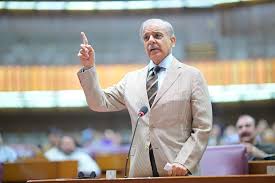
Prime Minister Shehbaz Sharif on Saturday renewed his call for a “Charter of Democracy” and a Charter of Economy, urging the opposition to work together for national unity and long-term political stability in Islamabad.
Addressing the National Assembly a day after the federal budget for the 2026–27 fiscal year was presented, he said Pakistan’s progress depends on cooperation beyond political divides. He stressed that the Charter of Democracy is essential to strengthen democratic continuity and reduce political tension.
The prime minister said he had repeatedly invited the opposition for dialogue, adding that ensuring balanced development across all provinces remains his responsibility. He said political differences should not come in the way of Pakistan’s national interest.
“We have no fight with PTI; they are all our brothers,” he said, adding that Parliament should function like a family where disagreements exist but unity remains intact. He stressed that all political forces share a common stake in Pakistan’s future.
Referring to provincial autonomy, the prime minister said there was full agreement on the constitutional right of provinces over their resources. He highlighted development work in Balochistan, including solar panel distribution worth Rs75 billion for farmers and a major highway project from Gwadar to Chaman costing Rs300 billion.
He said the highway is being built to modern standards and is part of the government’s development responsibility, not driven by political pressure. He also noted that under the 2010 NFC Award, Balochistan’s share had been doubled, calling it a constitutional obligation rather than a favour.
The prime minister also paid tribute to the armed forces and law enforcement agencies, saying they continue to make sacrifices in the fight against terrorism. He noted that 22 personnel had embraced martyrdom in recent days, calling their sacrifices a source of national pride.
Opening the budget debate, opposition leader Mahmood Khan Achakzai supported the idea of dialogue, saying political disputes should be resolved through consultation and mutual respect.
He said that winning political mandates must be respected and urged leaders to sit together to strengthen democratic institutions. He also stressed that parliament must be empowered for the benefit of the public.
Criticising federal-provincial financial arrangements, he said resources and responsibilities must be clearly balanced. He also called for easing political pressure on opposition figures and warned against deepening political divisions.
Achakzai proposed a political understanding where parties respect electoral outcomes and avoid interference during governments’ terms, arguing that stability is essential for governance and economic progress.