
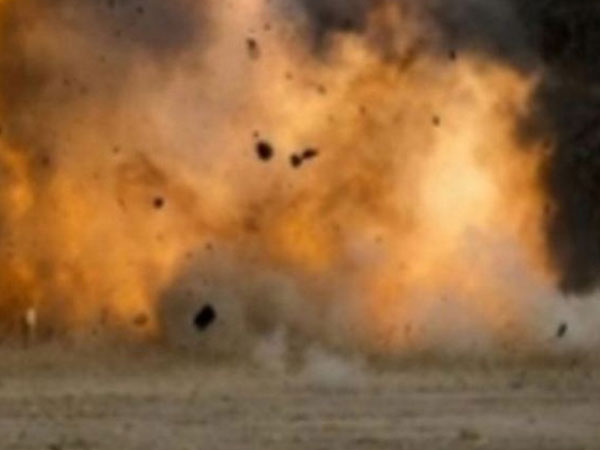
At least eight militants linked to the India-backed group Fitna al-Hindustan died on Wednesday when a vehicle-borne improvised explosive device went off prematurely while being assembled in Surab district, Balochistan. The military’s media wing, the Inter-Services Public Relations, confirmed the deaths and said several other militants sustained injuries in the blast.
According to ISPR, the initial explosion set off additional stockpiled explosives at the location, causing a secondary blast that killed three civilians in the vicinity and left more militants wounded.
Balochistan Explosion Triggers Wider Security Operation
Security forces and Balochistan Police moved quickly to the site following the incident, launching a joint clearance operation to hunt down surviving militants and those who had facilitated the bomb-making activity. During the operation, troops spotted militants attempting to flee and killed 10 of them in the ensuing engagement, though two soldiers were injured in the exchange of fire.
ISPR said sanitisation efforts remained underway in the area to root out any militants still hiding nearby.
Part of Ongoing Azm-e-Istehkam Campaign
The military statement noted that the counterterrorism drive tied to the Azm-e-Istehkam framework, sanctioned by the Federal Apex Committee under the National Action Plan, would proceed without pause. This latest Balochistan explosion comes just a day after security forces eliminated five Fitna al-Hindustan militants during an intelligence-led operation in the province’s Panjgur district.
Rising Militancy in KP and Balochistan
Violence linked to militant groups has climbed sharply in Khyber Pakhtunkhwa and Balochistan since the Afghan Taliban’s return to power in 2021. A report from the Centre for Research and Security Studies found that these two provinces remained Pakistan’s primary conflict zones during the second quarter of 2026, with KP bearing the brunt of the casualties.
Per the CRSS findings, KP and Balochistan combined made up nearly 96 percent of all violence-related deaths nationwide during the quarter. KP alone recorded 475 fatalities, or over 61 percent of the total, while Balochistan reported 265 deaths, accounting for 34 percent.
In terms of incidents, KP logged 151 attacks, representing 57 percent of the national count, while Balochistan followed with 94 incidents, or 35 percent, reinforcing how concentrated militant violence has become in these two provinces.