
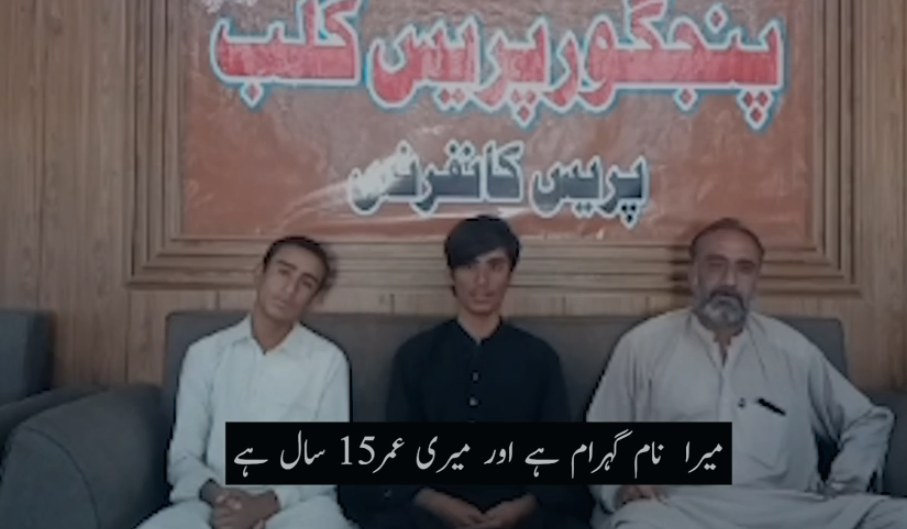
Disturbing terrorist recruitment revelations have emerged from Panjgur, Balochistan, where two underage brothers have reportedly surrendered to security forces after leaving a militant organization. The brothers, identified as Gehram and Fahad, have made serious allegations about how they were approached through social media, persuaded to join the group, and allegedly prepared for violent activities.
Speaking at the Panjgur Press Club, the brothers announced their disassociation from the organization identified in the supplied report as Fitna al-Hindustan. According to their account, their contact with the group began on TikTok, where an individual identified as Rehan allegedly offered them money to join.
Their statements have raised serious concerns about the alleged use of online platforms to approach vulnerable minors, influence their decisions, and draw them into activities that could endanger their lives and the safety of others.
The allegations also include claims of coercion, blackmail, and the exploitation of children. These claims require independent investigation and should not be treated as established facts without corroboration.
Terrorist Recruitment Revelations: How TikTok Allegedly Became the First Point of Contact
According to the brothers, their involvement began when a person named Rehan contacted them through TikTok. They alleged that he used the promise of financial rewards to persuade them to join the organization.
The brothers said that after reaching the group, they encountered individuals identified as commanders Bisham and Farooq. They alleged that the two men attempted to influence their thinking and encourage their participation in the organization’s activities.
Their account highlights concerns about the possible exploitation of social media to establish contact with minors and gradually influence their decisions. An approach that initially appears to offer friendship, financial assistance, or an opportunity to belong can expose vulnerable young people to manipulation.
The reported case also underlines the importance of recognizing suspicious online approaches, particularly when strangers offer money, encourage secrecy, or attempt to separate children from their families and trusted support networks.
Brothers Allege They Were Being Prepared for Violent Activities
One of the most serious revelations in the brothers’ statements concerns their alleged intended role within the organization.
Gehram and Fahad claimed that they were being influenced and prepared for activities that included suicide attacks, vehicle robberies, and the killing of innocent people.
The brothers said they eventually came to believe that targeting civilians was wrong. According to their account, this realization prompted them to flee the group and return before becoming involved in the alleged activities.
These claims raise concerns about the potential recruitment of children for violent purposes. Minors who enter such environments may face sustained pressure and manipulation, making it difficult to understand the full consequences of their involvement or leave safely.
The specific allegations about the brothers’ intended activities have not been independently verified in the information provided.
Disturbing Allegations of Child Abuse and Blackmail
The brothers also made serious allegations about the alleged treatment of minors within the group. They claimed that children were subjected to sexual abuse and that videos of the abuse were recorded and used to blackmail them.
If substantiated, these allegations would point to severe forms of exploitation and coercion. The claims require careful investigation by the relevant authorities, with particular attention to the safety, privacy, and protection of any children who may have been affected.
The alleged use of compromising material to intimidate minors raises additional concerns about how abusive individuals may use threats and fear to control vulnerable children and discourage them from leaving.
The supplied account does not include independent evidence establishing these allegations or a response from the individuals accused.
Panjgur Brothers Announce Disassociation From the Organization
During their appearance at the Panjgur Press Club, the two brothers publicly announced that they had severed their association with the organization.
Their reported surrender to security forces follows their account of escaping after recognizing what they described as the group’s intention to involve them in violence against civilians.
The development has brought renewed attention to the circumstances in which minors may become involved with militant organizations and the challenges they can face when attempting to leave.
The brothers’ statements provide their account of the events, but the full circumstances surrounding their recruitment, time with the group, and return would require independent verification.
Father Issues Warning to Parents Over Children’s Online Activities
The brothers’ father, Shahzad, urged parents to monitor their children’s social media activities and remain alert to approaches from people who may attempt to manipulate them.
His message highlights the importance of parental awareness at a time when online platforms can expose young users to strangers whose intentions may be difficult to assess.
Parents can help protect children by discussing online risks, encouraging them to report suspicious messages, and making clear that they can seek help without fear of blame or punishment. Offers of money, requests for secrecy, persistent private messaging, and attempts to encourage harmful activities should be treated as potential warning signs.
The case also demonstrates the importance of cooperation between families, schools, digital platforms, and child protection authorities in identifying and responding to suspected online exploitation.
Revelations Raise Broader Questions About Online Recruitment of Minors
The terrorist recruitment revelations from Panjgur have placed the alleged use of social media to approach children at the center of the story.
The brothers’ account describes a reported progression from online contact and financial inducements to interactions with senior members of a militant organization and alleged pressure to participate in violent activities.
While the claims require independent investigation, they highlight the potential vulnerability of minors to online manipulation and the importance of effective safeguards.
Authorities and relevant organizations face the broader challenge of identifying recruitment attempts, investigating allegations of abuse, and ensuring that children who may have been exploited receive appropriate protection and support.
The case also reinforces the need for responsible reporting. Allegations involving minors, sexual abuse, and militant activity must be handled carefully to protect children’s identities and avoid presenting unverified claims as established facts.
Conclusion: Panjgur Case Highlights the Need to Investigate Alleged Child Recruitment
The statements made by Gehram and Fahad have brought serious allegations of online recruitment, manipulation, and child exploitation into public discussion.
Their account describes how contact allegedly initiated through TikTok led to further involvement with a militant organization and claims that they were being prepared for violent activities. Their father has urged families to pay closer attention to children’s online interactions to help prevent similar situations.
The allegations now require thorough verification, while the reported case underscores the importance of protecting minors from coercion, investigating suspected exploitation, and ensuring that vulnerable children can access appropriate support.