
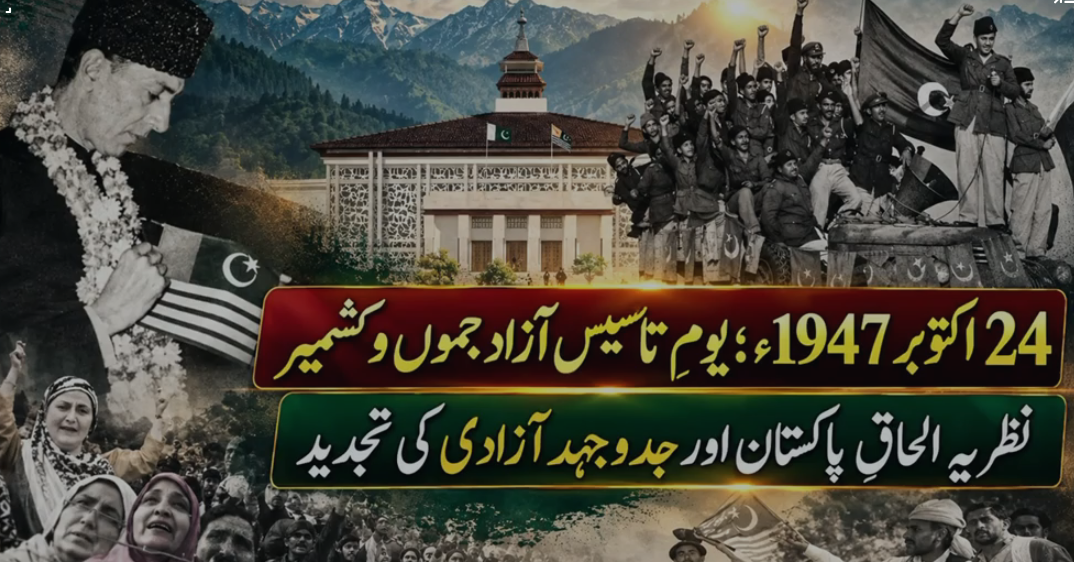
Azad Jammu Kashmir Foundation Day, observed annually on October 24, commemorates a defining moment in the region’s political history. The date marks the establishment of the provisional government of Azad Jammu and Kashmir in 1947 under the leadership of Sardar Muhammad Ibrahim Khan, amid the political upheaval and resistance that shaped the Kashmir freedom movement.
For many Kashmiris, the occasion represents a reminder of the historical struggle against Dogra rule, the aspirations expressed by political leaders in 1947, and the sacrifices associated with the movement. It also renews attention to the unresolved Kashmir dispute and the continuing calls for the right to self-determination.
The significance of October 24 extends beyond a commemorative date. It recalls a period when political mobilization, resistance, and efforts to establish an organized administration played a central role in shaping the future of Azad Jammu and Kashmir.
Azad Jammu Kashmir Foundation Day and the Events of 1947
The history commemorated on Azad Jammu Kashmir Foundation Day is closely connected to the political developments that unfolded across the former princely state of Jammu and Kashmir in 1947.
During this period, opposition to Dogra rule intensified as political tensions and demands for change shaped the region’s future. The resistance movement became an important part of the wider struggle over the political status of Jammu and Kashmir.
According to the historical narrative associated with the observance, the establishment of a provisional government on October 24, 1947, represented an effort to create an organized political and administrative structure for the movement.
Under Sardar Muhammad Ibrahim Khan’s leadership, the provisional administration became a significant institutional development in the history of Azad Jammu and Kashmir. The date has since been commemorated as a symbol of political determination, collective struggle, and the aspiration for self-government.
July 19, 1947: The Accession to Pakistan Resolution
An important milestone preceding the establishment of the provisional government was the resolution adopted on July 19, 1947, calling for Jammu and Kashmir’s accession to Pakistan.
The resolution is regarded by supporters of accession to Pakistan as a significant expression of the political position advanced by sections of the Kashmiri leadership during the final days of British rule in the subcontinent.
Its historical significance is closely linked to the wider political debate over the future of the princely state as British paramountcy came to an end and India and Pakistan emerged as independent countries in August 1947.
The resolution continues to hold symbolic importance for those who support Jammu and Kashmir’s accession to Pakistan. It forms part of the historical background against which the events of October 24 are understood and commemorated.
Sardar Muhammad Ibrahim Khan and the Establishment of the Provisional Government
Sardar Muhammad Ibrahim Khan played a central role in the establishment of the provisional government of Azad Jammu and Kashmir on October 24, 1947.
The formation of the government marked an attempt to establish a coordinated political and administrative centre during a period of intense conflict and uncertainty.
Its establishment is remembered as a major development in the institutional history of Azad Jammu and Kashmir. Rather than remaining solely a movement of resistance, the political effort sought to create an administrative framework through which its leadership could organize and represent its objectives.
For those commemorating the occasion, Sardar Muhammad Ibrahim Khan’s leadership remains closely associated with the founding narrative of Azad Jammu and Kashmir and the political developments of 1947.
Resistance to Dogra Rule and the Kashmir Freedom Movement
The struggle against Dogra rule forms an important part of the historical context surrounding the foundation of Azad Jammu and Kashmir.
Political grievances, resistance, and competing aspirations for the region’s future contributed to the developments that unfolded during 1947. The resulting conflict transformed the political landscape and became closely connected to the broader dispute over Jammu and Kashmir.
The movement’s history is remembered through accounts of political mobilization, resistance, and sacrifices made by people who sought to influence the region’s future.
October 24 serves as an annual occasion to reflect on these events and their lasting impact on the political identity and historical memory of Azad Jammu and Kashmir.
Kashmir’s Right to Self-Determination Remains a Central Issue
The observance of Azad Jammu Kashmir Foundation Day also draws attention to the unresolved political status of Jammu and Kashmir.
The right to self-determination remains central to the position expressed by many Kashmiri political leaders and organizations. They argue that the aspirations of the region’s people should remain a key consideration in efforts to address the longstanding dispute.
The Kashmir issue has continued to feature in regional diplomacy and international discussions for decades. Different parties maintain competing positions on the territory’s status, political future, and the mechanisms through which the dispute should be resolved.
For supporters of the Kashmiri self-determination movement, October 24 is therefore both a historical commemoration and an opportunity to renew calls for international attention to the unresolved dispute.
October 24: Remembering History, Sacrifice and Political Aspirations
Every year, October 24 provides an opportunity to revisit the events that led to the establishment of the provisional government of Azad Jammu and Kashmir.
The date connects the political developments of 1947 with the region’s continuing historical and political identity. It also encourages reflection on the sacrifices associated with the freedom movement and the aspirations that shaped the establishment of the provisional administration.
Beyond commemorative ceremonies, the occasion highlights the importance of understanding the historical background of the Kashmir dispute, including the competing political positions that emerged during the partition of British India.
For the people who observe the day, the foundation anniversary represents a continuing connection between historical memory, political identity, and the demand for a resolution that addresses Kashmiri aspirations.
Azad Jammu Kashmir Foundation Day, observed on October 24, commemorates the establishment of the provisional government in 1947 under Sardar Muhammad Ibrahim Khan’s leadership.
The occasion recalls the resistance to Dogra rule, the political significance of the July 19 accession resolution, and the efforts that led to the creation of an organized administration during a turbulent period in the region’s history.
It also brings renewed attention to the Kashmir dispute and the continuing calls for self-determination. Nearly eight decades after the events of 1947, October 24 remains an important date in the historical narrative and political identity of Azad Jammu and Kashmir.