
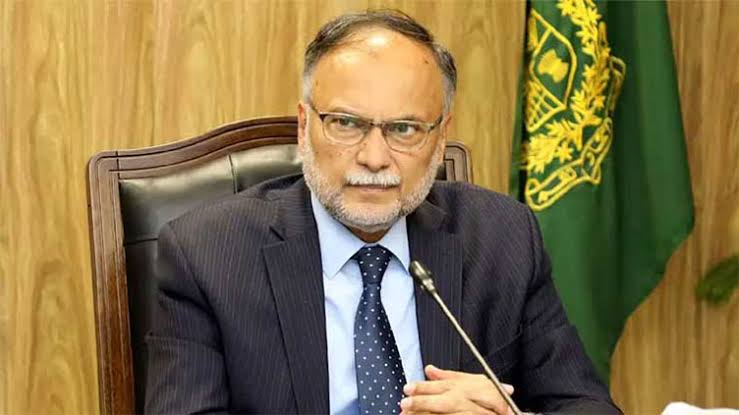
Federal Planning and Development Minister Ahsan Iqbal has called for the creation of 12 to 15 new provinces in Pakistan, asking Prime Minister Shehbaz Sharif to set up a dedicated committee to examine the country’s administrative setup.
“I have proposed that a committee be made, on administrative reforms, through the law minister that can at least start a national and political debate on what can and cannot be done,” Iqbal told reporters. He said he was holding off on raising the matter directly with the prime minister until Sharif returned from his trip to Kyrgyzstan.
Why the Provinces Debate Has Resurfaced
The idea of restructuring Pakistan’s provinces is not new, but it gained fresh momentum after Interior Minister Mohsin Naqvi brought it up in July. A day later, Inter-Services Public Relations Director General Lt Gen Ahmed Sharif Chaudhry echoed the call, urging a serious national conversation on the topic.
Iqbal argued that Pakistan’s existing four provinces had grown too centralised over time, which he linked to weakening delivery of basic services like health and education. “I would say we need 12-15 new provinces,” he said, suggesting that each existing province be split into three. He was careful to note that any division would need to follow an equitable formula, using Punjab as an example, so that splitting it wouldn’t disproportionately boost its representation in the Senate.
Despite Iqbal’s remarks, the federal government has stopped short of confirming any formal process. Rana Ihsaan Afzal Khan, coordinator to the prime minister, said no committee exists at the federal level and that no official forum has taken up the issue. He added that even if new provinces were eventually created, they wouldn’t take effect until the next election cycle.
A Debate That Keeps Resurfacing
Pakistan today consists of four provinces, two autonomous territories, and one federal capital territory. Calls for additional provinces have surfaced periodically for decades, driven by various political and regional groups.
The current round began on July 30, when Naqvi declared that Pakistan’s governance system had effectively broken down. Speaking in Islamabad, he said: “The [governance] system in the country has collapsed. We have been dragging [this system] for over 70 years,” and floated the idea of new administrative units as a fix. The ISPR chief followed up the next day, noting that Pakistan’s population had quadrupled while the number of provinces stayed the same, and questioned whether that still served good governance.
The reaction was swift, especially in Sindh, where nationalist groups have long resisted any move to split the province. Since August 12, these groups have staged near-daily protests against dividing Sindh. Ayaz Latif Palijo, head of the Qaumi Awami Tehreek, put it bluntly: “No child would want their mother to be divided into two… We want one Sindh.”
Criticism hasn’t come only from nationalist circles. Punjab’s information minister, Azma Bokhari, dismissed Naqvi’s comments as “unserious about a serious issue.” In the Sindh Assembly this week, PPP leader Nisar Khuhro pushed back forcefully, asking who would want to “cut their mother into pieces.”
Would Smaller Provinces Actually Improve Governance?
Talk of dividing Punjab and Khyber Pakhtunkhwa isn’t new either. Proposals to create a South Punjab province and a separate Hazara province date back decades. In 2020, the government of the time set up a South Punjab civil secretariat in Multan, widely seen as groundwork for a future province covering the Multan, Bahawalpur, and Dera Ghazi Khan divisions.
But does breaking up Pakistan’s provinces actually lead to better governance? Umair Javed, who teaches politics and sociology at the Lahore University of Management Sciences, said the research is mixed, though it tends to suggest smaller administrative units can bring decision-making closer to citizens. He cautioned, however, that devolution without accountability carries its own risks. “In the absence of accountability, devolved governance can lead to elite capture,” he said.
The debate isn’t only about how many provinces Pakistan should have, but where authority should ultimately rest. Defence Minister Khawaja Asif recently suggested placing Karachi (Sindh) and Gwadar (Balochistan) directly under federal control rather than turning them into standalone provinces. Javed was skeptical of that idea, arguing it would mainly benefit federal coffers rather than address governance gaps at the city level, since tax revenue from Karachi would flow straight into the federal pool while Islamabad lacks the capacity to manage municipal affairs.
The Financial and Legal Cost of Redrawing the Map
Even with political consensus, creating new provinces would carry a heavy price tag. Pakistan’s finances remain tight, the country narrowly avoided default in 2023 after securing a $3 billion IMF bailout, followed by a larger $7 billion Extended Fund Facility, and continues to grapple with high debt and inflation.
Every new province would need its own elections, assembly, chief minister’s office, and high court, along with fresh bureaucratic departments and salaries. “The country is fairly constrained in terms of the amount of spending that it can do,” Javed said, noting that replicating provincial governance structures would be costly.
Beyond the budget, dividing provinces would reopen sensitive questions around water, land, and resource sharing. Water allocation could be especially contentious, since Pakistan’s four provinces currently operate under fixed shares set by the 1991 Water Apportionment Accord. Splitting a province would force a renegotiation of how that allocation gets divided among its successors.
Who Really Stands to Gain?
For critics, the push for new provinces in Pakistan is less about efficient administration and more about power. Karachi-based political activist Dr Sorath Sindhu said the proposal echoes similar ideas floated under past military governments. “We think this is the same old dream they [the establishment] are trying to bring again,” she said.
The stakes are especially high for Pakistan’s three major political parties, each of which governs one of the country’s provinces. Javed suggested the current debate could work against them strategically. “This conflict in some ways plays into the hands of the establishment,” he said, framing it as a way for the establishment to pressure political parties into concessions under the guise of reform.