
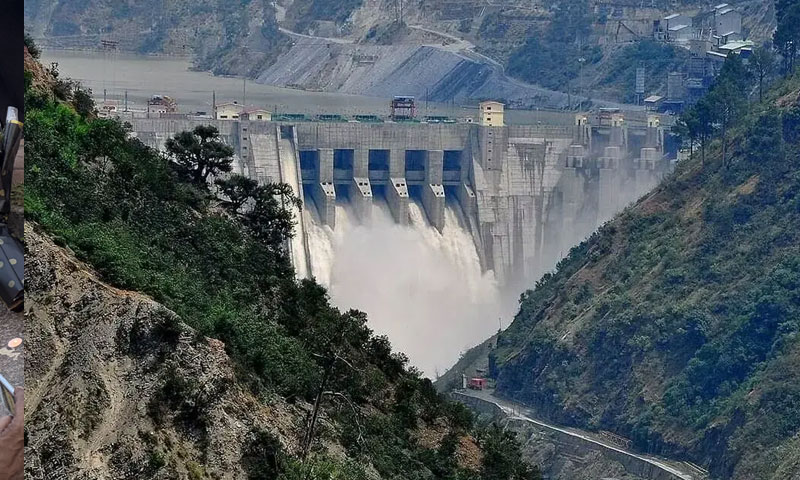
Pakistan has secured a significant legal victory after the Permanent Court of Arbitration in The Hague issued a ruling directing India to pause construction on key hydroelectric projects and continue honoring the Indus Waters Treaty. The decision marks a turning point in the long-running dispute over India’s unilateral move to suspend the decades-old water-sharing agreement.
According to the court, the treaty between India and Pakistan has never actually lapsed, since India failed to present any valid grounds for halting or terminating it. This Indus Waters Treaty ruling effectively rejects New Delhi’s position and reaffirms Islamabad’s water rights under the pact.
Background: Why India Suspended the Treaty
The dispute traces back to April 2025, when 26 people were killed in Indian Illegally Occupied Jammu and Kashmir. India blamed Pakistan for orchestrating the attack, a charge Islamabad has consistently rejected. Citing this incident, New Delhi placed the Indus Waters Treaty “in abeyance,” effectively freezing its obligations under the agreement.
Tensions escalated further when India launched military action against Pakistan in May 2025 based on these unproven accusations, triggering the most intense round of fighting between the two nuclear-armed neighbors in years. A ceasefire, mediated by the United States, eventually brought the fighting to a halt.
What the Hague Court Decided
In its ruling delivered on Monday, the arbitration court concluded that India’s April 2025 decision could only be interpreted as an attempt to suspend or terminate the treaty altogether. After reviewing every justification India had put forward, including statements made publicly by Indian officials, the judges unanimously found none of them legally sufficient.
“Accordingly, the Indus Waters Treaty remains fully in force, and India must observe its obligations under the treaty, including those relating to the design and operation of its hydro-electric projects on the western rivers,” the court stated.
The five-member bench includes Prof Sean D Murphy (United States) as chair, along with Prof Wouter Buytaert (Belgium), Prof Jeffrey P Minear (United States), Judge Awn Shawkat Al-Khasawneh (Jordan), and Dr Donald Blackmore (Australia).
Restrictions on India’s Hydropower Projects
Beyond reaffirming the treaty’s validity, the court also addressed Pakistan’s request for interim protective measures concerning India’s Ratle Hydroelectric Plant. Judges ruled that India cannot proceed with concreting the dam wall or power intake structure beyond specified limits until 90 days after a neutral expert issues a final verdict, expected around July 16, 2027.
The court additionally ordered India to submit regular updates on the Ratle project’s construction timeline as part of the interim arrangement.
This Indus Waters Treaty ruling also touches on broader questions surrounding run-of-river hydroelectric projects that India is entitled to build on the Chenab, Jhelum, and Indus rivers, along with their tributaries, before the water reaches Pakistan. Two projects sit at the center of the case: the Kishenganga Hydroelectric Plant and the Ratle Hydroelectric Plant, both of which are simultaneously under review by a World Bank-appointed neutral expert.
Timeline of the Legal Battle
Pakistan first brought the matter to arbitration in August 2016. India’s objections led the World Bank to pause the selection of both the court’s chairman and the neutral expert later that year, a freeze that remained in place until it was lifted in 2022.
Since then, the court has issued several key rulings. It dismissed India’s challenge to its jurisdiction through an Award on Competence in July 2023, followed by an Award on Issues of General Interpretation in August 2025. A clarification requested by Pakistan was addressed in November 2025, and an Award Concerning Maximum Pondage followed in May 2026, setting the stage for this latest ruling.
With the neutral expert’s final decision on the Ratle and Kishenganga projects due in July 2027, the Indus Waters Treaty dispute is likely to remain a central issue in India-Pakistan relations for the foreseeable future.