
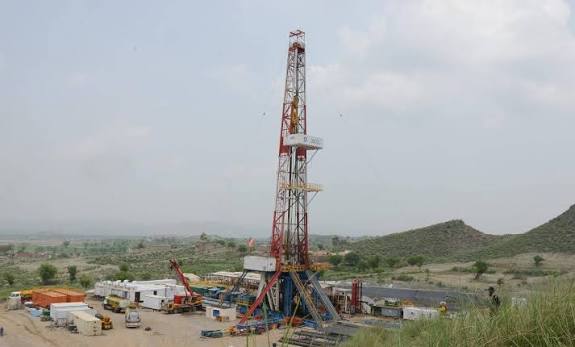
Pakistan’s drive to tap into critical minerals has taken a significant step forward after the Oil and Gas Development Company Limited (OGDC) detected lithium in formation water drawn from a high-temperature geothermal well in Sindh. Officials say the concentrations found are on par with some of the world’s leading lithium-bearing geothermal brine.
The find emerged from detailed geochemical testing of produced formation water at a successfully tested geothermal well, part of OGDC’s pilot geothermal programme in Sindh. Senior OGDC officials described it as a first of its kind for the country.
What Is Formation Water, and Why Does It Matter?
Formation water refers to salty water trapped underground for millions of years alongside oil, gas, and trace minerals such as lithium. When this water is brought to the surface during oil and gas operations, it’s known as produced water, and companies around the world are increasingly extracting lithium from it to use as a brine source for battery production.
This lithium discovery places Pakistan among a growing list of countries exploring geothermal brines as an alternative source of the mineral, which has become central to the global shift toward clean energy.
Lithium is a core ingredient in electric vehicle batteries, large-scale energy storage systems, and numerous emerging technologies, with demand projected to climb sharply over the next decade as nations move away from carbon-heavy energy sources. Roughly 80% of global lithium use is tied to EV batteries, powering everything from cars and buses to trucks and two-wheelers built by major automakers. The mineral also supports grid-scale storage systems that help stabilize electricity from solar and wind sources.
Its uses extend well beyond energy. Lithium shows up in smartphones, laptops, and wearables, and its light weight makes it useful in aircraft, satellites, and defense equipment. It’s also found in glass, ceramics, industrial lubricants, aluminum alloys, specialty chemicals, and even medications for bipolar disorder.
How Does Pakistan’s Lithium Compare Globally?
OGDC officials noted that the lithium concentrations recorded during testing are comparable to higher-tier geothermal brines already under commercial development in Europe and North America. Geothermal brines are gaining attention worldwide as a relatively sustainable lithium source, since they allow simultaneous extraction of the mineral and generation of geothermal energy, cutting down on the environmental impact typically linked to conventional mining.
Officials cautioned that while the find is encouraging, more technical evaluation is needed to confirm the resource’s scale and commercial feasibility. OGDC has mapped out an expanded assessment programme covering detailed brine chemistry analysis, resource confirmation studies, and evaluations benchmarked against international standards, aimed at determining the deposit’s regional spread, continuity, and economic potential.
The company’s technical teams are reportedly already coordinating with international consultants to guide the next stage of exploration, bringing global expertise into Pakistan’s developing geothermal and critical minerals sector.
What This Could Mean for Pakistan
Should follow-up studies confirm commercially recoverable reserves, this lithium discovery could carry major implications for Pakistan’s economy. As countries compete globally to secure critical mineral supplies for electric mobility and renewable energy, domestic lithium resources could bolster Pakistan’s position in international supply chains, draw foreign investment, and open up new industrial opportunities.
The breakthrough also underscores the largely untapped potential of Pakistan’s subsurface resources and reflects OGDC’s broader push to diversify beyond traditional oil and gas exploration. By expanding into geothermal energy and critical minerals, the state-run company is positioning itself within emerging energy technologies while backing the country’s longer-term move toward a more diversified and sustainable resource base.