
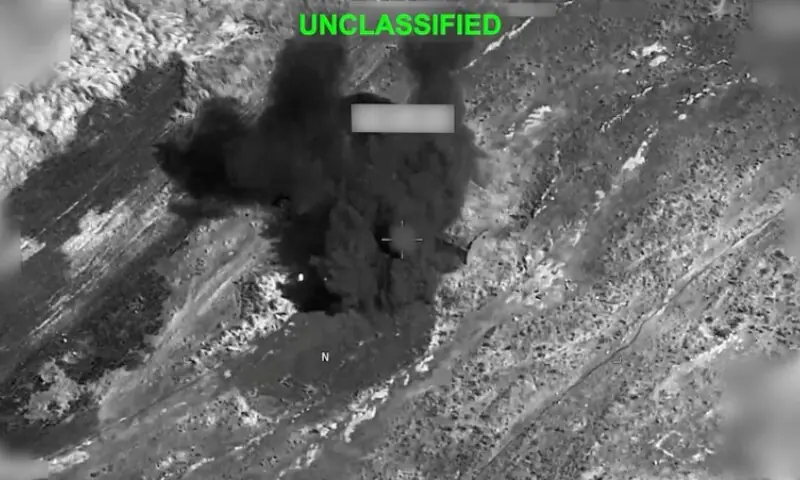
US Iran strikes Strait of Hormuz entered a ninth straight day on Monday, with tensions climbing further after Iran reported that two oil tankers had exploded and been left disabled near the strategic waterway. The escalation has renewed fears over the safety of one of the world’s busiest energy shipping corridors.
Iran’s Islamic Revolutionary Guard Corps said Monday it had launched ballistic missiles at American aircraft based at Jordan’s Aqaba airport, along with strikes on US military assets in Kuwait, at both Al-Adiri camp and Ali Al Salem Air Base, as well as targets in Syria. Bahrain’s interior ministry reported sirens sounding across the country the same morning, while Kuwait’s army said it intercepted hostile drones during the Iranian assault.
A Ceasefire That Fell Apart
The current wave of strikes traces back to the collapse of an interim ceasefire reached roughly a month earlier. Since then, the standoff over control of the Strait of Hormuz has deepened, disrupting energy flows and fueling worries about a fresh spike in global inflation.
US Central Command confirmed it had launched what it called a new wave of strikes intended to weaken Iran’s capacity to threaten commercial vessels moving through the strait, though it offered few additional details. Iran’s semi-official Tasnim news agency reported that American missiles hit multiple Iranian cities early Monday, with explosions reported in Tabriz, Chabahar, Konarak, Bandar Mahshahr, and Bandar Imam Khomeini.
Secretary of State Marco Rubio said Washington would keep striking Iranian targets for as long as attacks on international shipping continued. He described the Strait of Hormuz as international waters and said the US would keep responding to Iranian action there, while adding that Washington remained open to a diplomatic resolution.
Tankers, Infrastructure, and a Widening Toll
Kuwait’s government said one of its desalination plants was struck for a second consecutive day, sparking a fire the government characterized as a direct hit on civilian infrastructure. Separately, the UK Maritime Trade Operations agency said it had received an unverified report of a vessel on fire near the Omani coast.
According to the Revolutionary Guards, the two damaged oil tankers had been attempting to use what Iran called an unsafe southern route through Hormuz, and the group claimed the vessels had been steered that way by the US military. Reuters was unable to independently confirm the incident, and no information was released about the ships’ names, flags, or crews. The Guards warned that the waterway would stay unsafe for oil and petrochemical shipments as long as what they termed US aggression continued in the region.
Shipping data from LSEG showed only four vessels transited Hormuz on Sunday, down from eight a day earlier, though at least three oil products tankers and one Very Large Crude Carrier had entered the strait since Friday to load cargo. Oil prices climbed 2% on Monday, pushing past $90 a barrel.
Rising Military Casualties
The human cost of the conflict continued to grow. The US military confirmed a service member was killed Saturday in northern Iraq during a controlled detonation of unexploded ordnance recovered from a downed Iranian attack drone. That followed earlier reports of two American personnel killed in Jordan and a third listed as missing, with Central Command saying Sunday that unidentified remains found at Friday’s attack site were still being examined for verification.
In total, 17 US military personnel have died since the conflict began, with more than 420 others wounded. The broader war, which started on February 28 when the US and Israel struck Iran in an effort to disable its nuclear and missile programs and weaken allied militias in the region, has killed thousands of people, the majority in Iran and Lebanon.
As US Iran strikes Strait of Hormuz continue without signs of slowing, the standoff shows little sign of easing, leaving global shipping routes and oil markets exposed to further disruption in the days ahead.