
US-Iran talks cancelled after a sharp escalation in fighting between Israel and Hezbollah in southern Lebanon, casting fresh doubt on efforts to secure a broader regional peace agreement.
The negotiations were scheduled to begin on Friday in the Swiss village of Obbürgen. The talks were intended to build on a recently signed memorandum of understanding (MOU) that created a 60-day framework for reaching a permanent agreement on Iran’s nuclear programme and restoring stable oil shipments through the Strait of Hormuz.
However, the diplomatic effort was derailed as violence intensified along the Israel-Lebanon border.
The White House confirmed that US Vice President JD Vance, who is leading negotiations for the Trump administration, would no longer travel to Switzerland. A spokesperson said the logistics of the negotiations had always been uncertain and that Vance’s departure had been cancelled.
The decision came after some of the heaviest exchanges of fire between Israel and Hezbollah since a ceasefire was established.
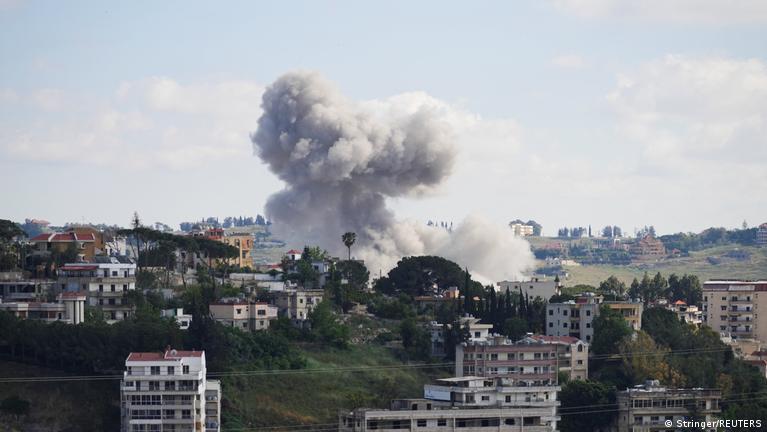
Hezbollah launched multiple rocket attacks against Israeli forces near the southern Lebanese city of Nabatieh. Israel responded with a series of airstrikes targeting the city and nearby areas. According to Lebanon’s Health Ministry, at least 16 people were killed and 33 others were injured.
Hezbollah said it targeted Israeli troops advancing toward the hills surrounding Nabatieh, an area that has remained a flashpoint despite the ceasefire announced between the United States and Iran.
The cancellation appeared sudden. Reports indicated that Vance’s staff, journalists, and advance teams had already gathered in preparation for the trip. White House officials and support personnel were also in Switzerland awaiting the negotiations.
Iranian Supreme Leader Ayatollah Mojtaba Khamenei said he had approved the MOU despite reservations. At the same time, the United States officially lifted restrictions affecting Iranian ports, a move seen as part of efforts to implement the interim agreement.
Before the talks were called off, Iranian media reported that Tehran wanted to see practical implementation of the agreement before committing to another round of negotiations. Iranian officials had not confirmed whether their delegation would travel to Switzerland.
Reports from regional media suggested Iran was delaying participation because of Israel’s continuing military operations in Lebanon.
Israel, which was not part of the US-Iran negotiations, has continued military operations in Lebanon and accused Hezbollah of violating the ceasefire. Hezbollah rejected those accusations and claimed its fighters had destroyed three Israeli tanks in southern Lebanon. Israel has not confirmed the claim.
The conflict has caused heavy losses on both sides. The war in Lebanon has killed more than 3,900 people, while Hezbollah attacks have resulted in the deaths of Israeli soldiers and civilians.
Adding to tensions, Israel announced a new security zone in southern Lebanon that includes a large area of Lebanese territory. Lebanese officials have demanded a full Israeli withdrawal, a position also supported by Iran under the terms of the MOU.
The agreement calls for a permanent end to the war in Lebanon and guarantees for the country’s sovereignty and territorial integrity. US President Donald Trump has repeatedly said he expects a complete ceasefire across the region.
Israel has so far refused to commit to a full withdrawal from southern Lebanon, drawing criticism from both Trump and Vance. Speaking on Thursday, Vance said Israel needed to support the peace process and expressed concern over civilian casualties caused by military actions.
Iran’s chief negotiator, Mohammad Ghalibaf, also warned against any violation of the agreement, saying Tehran would respond decisively if the deal were breached.
The collapse of the planned negotiations highlights the fragile nature of current diplomatic efforts. Despite recent progress, continuing violence in Lebanon threatens hopes for a lasting settlement to a conflict that has killed thousands, disrupted energy markets, and increased uncertainty across the Middle East.
The agreement gives negotiators 60 days to reach a final understanding on Iran’s nuclear programme, with an option to extend the deadline if both sides agree. It also includes plans for a $300 billion reconstruction fund and other economic incentives.
Meanwhile, although the United States has lifted restrictions on Iranian ports, shipping activity through the Strait of Hormuz remains limited as regional tensions continue.