
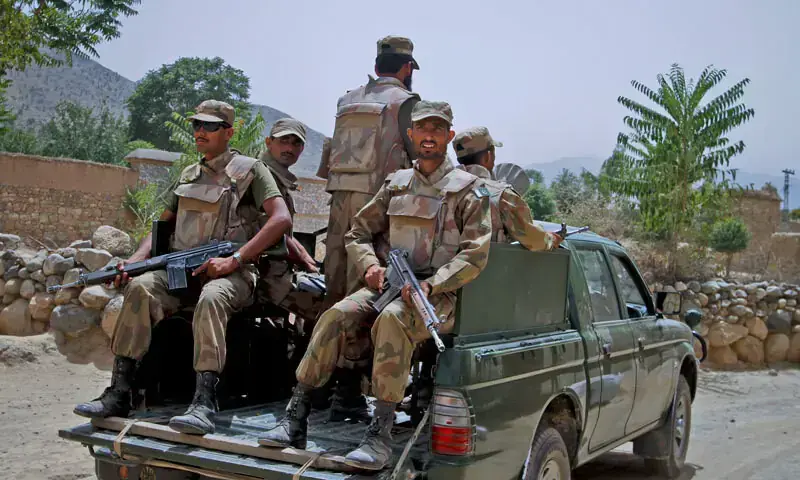
Speaking to the media, Sanaullah said intelligence agencies had detailed information about the number and locations of suspected militants. He described their intelligence-gathering capabilities as highly effective and said intelligence-based operations were being conducted in sensitive areas across the province.
According to Sanaullah, militant groups generally consist of three to 15 individuals, with around 70 per cent of these groups allegedly operating in sensitive locations. He claimed that militants were living among local communities, making security operations more challenging.
The adviser warned that civilians could face serious risks if militants continued to operate from populated areas.
Residents, he said, had been asked to ensure that militants were removed from their communities. If they could not do so, they should allow security personnel to carry out their operations.
Sanaullah cautioned that the absence of cooperation could increase the likelihood of civilian casualties and other unintended consequences during counterterrorism missions.
Why KP Security Operations Are Critical to Counterterrorism
The situation in Khyber Pakhtunkhwa highlights the challenges facing Pakistan’s security forces as they attempt to dismantle militant networks operating in populated and sensitive areas.
Intelligence-based operations are intended to identify suspected militants, locate their positions and support targeted action against security threats. However, when armed groups operate close to civilian populations, security personnel must contend with additional risks while attempting to protect residents and prevent further attacks.
Sanaullah argued that eliminating terrorism in the province remained an achievable objective, provided the authorities responsible for maintaining law and order worked closely with law enforcement agencies.
He also accused the previous PTI-led provincial administration, headed by Sohail Afridi, of discouraging public cooperation with security agencies. His remarks came amid a broader political dispute over responsibility for the worsening security situation.
According to the adviser, the administration currently overseeing Khyber Pakhtunkhwa had made the elimination of terrorism its principal objective.
He expressed confidence that the threat could be brought under control within weeks or months, allowing the province to move towards normality.
Sanaullah also called on Pakistan Tehreek-e-Insaf (PTI) to support counterterrorism efforts, arguing that political differences should not prevent cooperation on security matters.
Government Seeks Opposition Support Against Militancy
Alongside his comments on security, Sanaullah addressed the possibility of dialogue with opposition leaders.
He said the government remained willing to meet the opposition leader at the Prime Minister House and discuss political matters, indicating that the invitation remained open.
“If the opposition leader comes to the Prime Minister House, we will make him sit there and offer him tea,” Sanaullah said.
He also spoke about Mahmood Khan Achakzai, head of Tehreek Tahafuz-e-Aain Pakistan (TTAP), describing him as a respected political figure who had supported the government on previous occasions.
Sanaullah said the government respected Achakzai but disagreed with his insistence on certain demands, which he suggested were inconsistent with the standing of a leader of his stature.
His remarks reflected the government’s stated expectation that opposition parties should contribute to efforts to address the province’s security challenges, even as political tensions continue.
Governor’s Rule Changes the Political Landscape in KP
The security debate intensified after President Asif Ali Zardari imposed an emergency and governor’s rule in Khyber Pakhtunkhwa on October 11, effectively sidelining the PTI-led provincial government.
The decision followed recommendations from the federal cabinet and approval of a summary submitted on the advice of Prime Minister Shehbaz Sharif. The constitutional provisions cited were Articles 232 and 234.
The presidential proclamation referred to an increase in terrorist attacks and extremist activities, including assaults on infrastructure, government installations and law enforcement personnel.
It also alleged that the provincial administration had failed to demonstrate the commitment and determination required to address terrorism and maintain public order.
The move placed the province’s political and administrative arrangements at the centre of an increasingly contentious national debate.
PTI and the federal government have been at odds over the causes of deteriorating security, with the federal leadership arguing that stronger administrative action and cooperation with security institutions are necessary to counter militancy.
Shehbaz Sharif Promises Security and Development for KP
Prime Minister Shehbaz Sharif has defended the decision to impose emergency measures and governor’s rule, saying the move was taken under extreme compulsion.
On Thursday, he criticised PTI over the province’s worsening security conditions and recalled a period when Khyber Pakhtunkhwa had been regarded as a peaceful region.
The prime minister pledged to work with military leadership to restore stability and improve conditions for residents.
He said cooperation with the field marshal would help bring peace and prosperity back to the province. He also promised that Khyber Pakhtunkhwa would receive development opportunities comparable to those available in other provinces.
The government’s position is that restoring security must go hand in hand with economic progress and improved public services. Without a stable environment, development projects, commercial activity and everyday life can all be disrupted by the threat of violence.
Can Security Operations Restore Lasting Peace in Khyber Pakhtunkhwa?
The effectiveness of counterterrorism operations will depend on several factors, including reliable intelligence, coordination among security agencies, effective administration and cooperation from local communities.
While intelligence-led action can help security forces target militant networks, protecting civilians remains a central challenge when operations take place near homes and populated areas.
Political consensus may also influence the government’s ability to sustain a coordinated response. Cooperation between federal and provincial authorities, law enforcement agencies and community representatives could help improve the effectiveness of security measures.
Sanaullah has expressed confidence that terrorism can be eliminated within a relatively short period. Whether that goal can be achieved will depend on developments on the ground and the ability of the authorities to translate their stated priorities into lasting improvements in security.
For the people of Khyber Pakhtunkhwa, the central concern remains the restoration of peace, the protection of civilian lives and the ability to live without the constant threat of militant violence.
Effective KP security operations are therefore not only a matter of law enforcement. They are also essential to safeguarding communities, restoring public confidence and creating the conditions needed for long-term stability and development across the province.