
Bilawal Bhutto-Zardari’s strong warning against dividing Sindh by force reflects more than the Pakistan Peoples Party’s opposition to the creation of new provinces. His remarks point to deeper political concerns over provincial autonomy, constitutional authority and the growing mistrust among political forces in Pakistan.
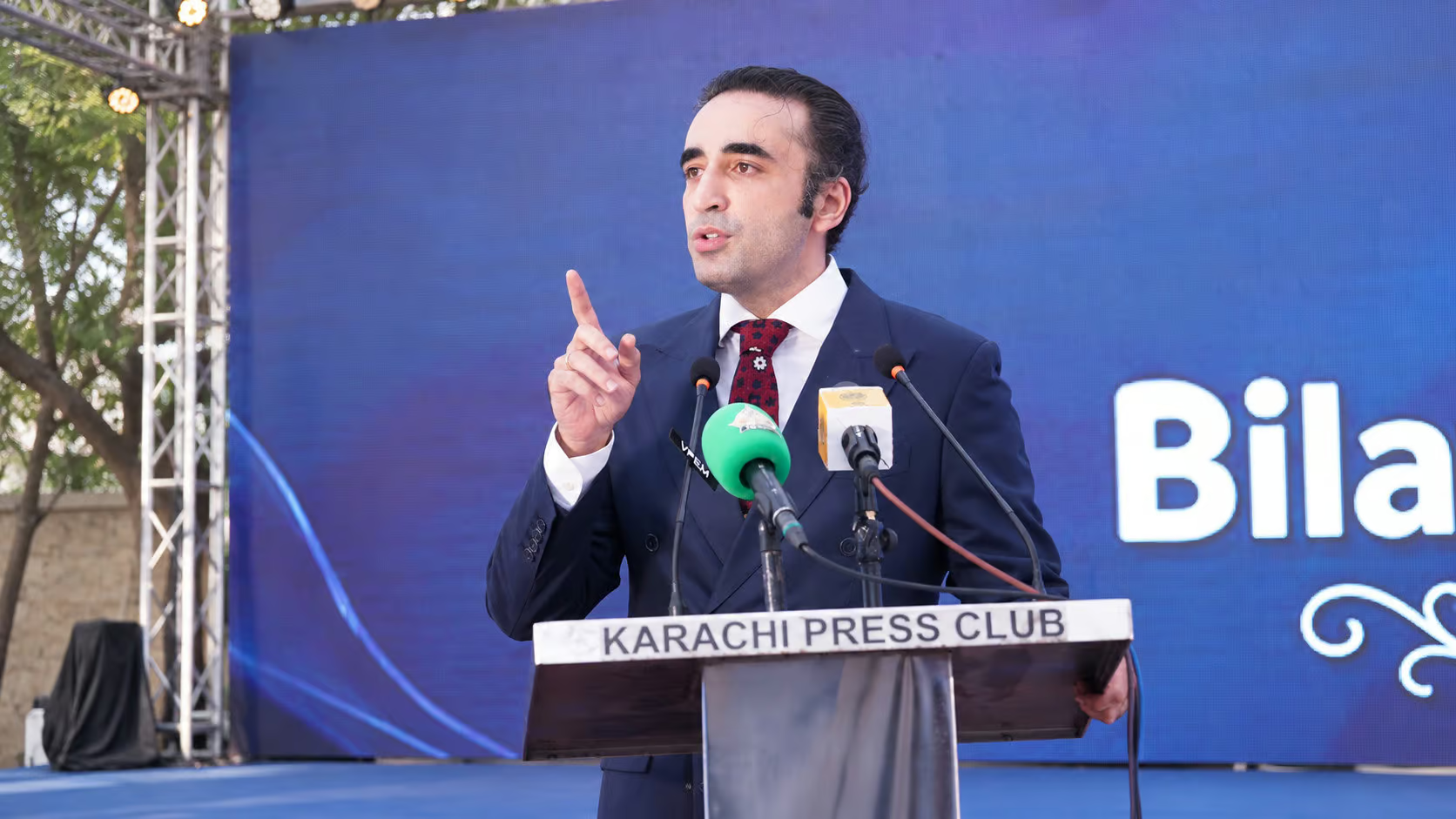
Addressing an event at the Karachi Press Club, the PPP chairman warned that any attempt to divide Sindh through coercion could trigger serious unrest, deepen political divisions and even lead to bloodshed in Karachi and Hyderabad. He argued that the creation of new provinces must reflect the wishes of the people and follow constitutional and legal procedures.
“If the province is divided by force, society will be divided,” Bilawal said, warning that ordinary people could take up arms and that the consequences would extend far beyond isolated incidents of violence.
His choice of words was significant. Rather than treating the issue as an administrative debate about governance and representation, Bilawal presented it as a question of political identity, public consent and the historical relationship between Sindh and the federal government.
For the PPP, Sindh is not just another province. It is the party’s strongest political base and a central part of its political identity. Any proposal to divide the province therefore carries electoral, political and historical implications for the party. Bilawal’s forceful response also reflects concerns that a debate over new provinces could eventually challenge the PPP’s political position in the province.
However, his argument goes beyond party politics. By repeatedly invoking the Constitution, the 18th Amendment and the historical experience of One Unit, he is attempting to frame the controversy as a struggle over provincial rights and the balance of power between the federation and the provinces.
Bilawal questioned why proponents of new provinces were discussing a referendum when the Constitution already provided a mechanism for such changes. He also challenged the provincial minister advocating a referendum to first seek support within his own assembly. According to him, the Sindh Assembly had already expressed its opposition to dividing the province on several occasions.
His position raises an important question: can a proposal for administrative restructuring gain legitimacy without the consent of the people directly affected? At the same time, opposing any discussion of new provinces risks turning a legitimate debate about administrative efficiency, representation and local governance into a confrontation over political identity.
Bilawal also linked the controversy to the wider question of provincial autonomy and financial rights. He claimed that even 16 years after the passage of the 18th Amendment, provinces had not received their full financial resources. He referred to the provinces’ share of the petroleum levy, which he put at approximately Rs1.7 trillion, and accused the federal government of failing to provide the resources needed for public services.
These remarks suggest that the PPP wants to shift the debate beyond the territorial boundaries of Sindh towards the unfinished business of federalism. By highlighting financial grievances, Bilawal is reminding the federal government that provincial autonomy must translate into actual administrative and financial authority.
His criticism of the federal government, however, comes with an interesting political contradiction. The PPP supported Shehbaz Sharif’s appointment as prime minister and remains part of the governing arrangement, yet Bilawal is increasingly adopting the language of opposition. He said he wanted the prime minister to succeed but also expected him to exercise sufficient authority over his ministers.
This balancing act allows the PPP to maintain its position within the federal political arrangement while distancing itself from decisions or statements that could damage its interests in Sindh. It also exposes the fragile nature of Pakistan’s coalition politics, where parties share power but frequently disagree over major policy questions.
Bilawal’s comments on Imran Khan and the country’s political system further reveal the broader political thinking behind his speech. Describing the incarcerated PTI founder as a political prisoner, he questioned why successive prime ministers had faced imprisonment after leaving office. He argued that Pakistan needed to move away from political victimisation and build consensus on democratic continuity.
His proposed round-table conference or all-parties conference is an attempt to bring political forces together around what he described as a political reset. He maintained that the country’s system had not simply collapsed but had been deliberately weakened. He also acknowledged that he and other political actors shared responsibility for the prevailing situation.
The proposal reflects a recognition that political instability cannot be resolved through arrangements that exclude major political stakeholders. Without a minimum level of trust among political parties, parliament and state institutions, even constitutional reforms may struggle to achieve lasting acceptance.
However, the question remains whether political leaders are genuinely prepared to compromise on their respective interests. Calls for dialogue have repeatedly emerged during political crises, but differences over power, accountability and constitutional authority have often prevented meaningful progress.
Bilawal’s emphasis on restoring public confidence in parliament, the media and other institutions also points to a wider crisis of credibility. Rising inflation, unemployment and poverty have increased public frustration, while political confrontation continues to dominate the national debate.
Information Minister Attaullah Tarar responded by questioning the PPP’s position, arguing that enjoying power while simultaneously acting like an opposition party was contradictory. He defended the referendum proposal as a constitutional way of determining public opinion and maintained that debate over new provinces should continue.
Other political parties also expressed differing positions. MQM-Pakistan defended the demand for new provinces, arguing that a significant section of Sindh’s urban population supported the idea. JUI-F, meanwhile, appreciated Bilawal’s position and questioned the need for a referendum when the Constitution already provided a mechanism.
Senate Opposition Leader Allama Raja Nasir Abbas separately called for negotiations to reverse the 26th and 27th constitutional amendments through parliament, adding another dimension to the debate over constitutional reforms and political consensus.
Ultimately, Bilawal’s warning against dividing Sindh reflects a political mindset in which provincial identity, constitutional safeguards and democratic consent are closely linked. His argument carries weight in highlighting the dangers of imposing major political decisions without public acceptance. However, the same principle must also allow room for peaceful debate over administrative reforms and the legitimate demands of different communities.
The implications are significant for Pakistan. If political disagreements over provincial boundaries, constitutional amendments and the distribution of resources continue to be treated as contests of political strength, they could deepen existing divisions. Conversely, a transparent parliamentary process, meaningful public consultation and fair distribution of resources could turn these disputes into opportunities for democratic reform.
The real test for Bilawal and other political leaders will be whether they can translate their calls for constitutionalism and political consensus into a process that accommodates competing interests rather than reinforcing political divisions.