
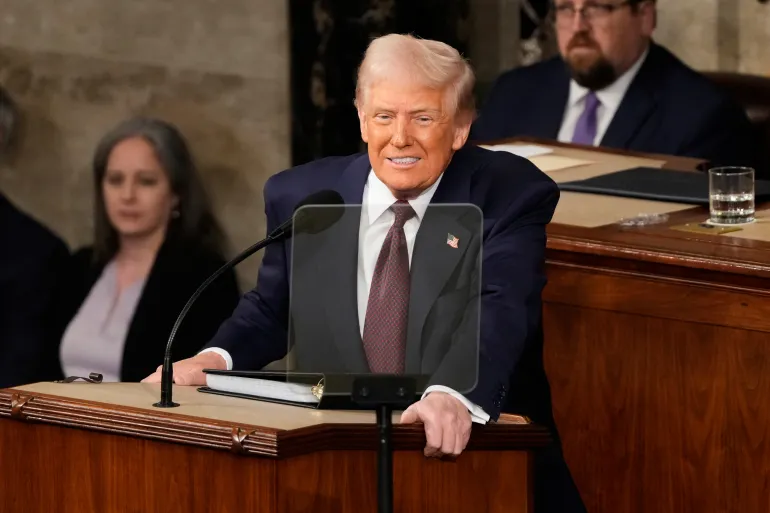
Hostilities against Iran have officially been declared over by U.S. President Donald Trump, who told Congress that fighting had stopped following a ceasefire. He said there had been no exchange of fire since early April, calling the conflict “terminated.”
Trump made the announcement as a legal deadline approached. Under U.S. law, presidents can carry out military action for 60 days without Congress approval. After that, they must either seek permission or withdraw forces. By stating that hostilities against Iran have ended, Trump is trying to avoid that requirement.
However, the situation remains disputed. Lawmakers, especially Democrats, argue that the conflict is not truly over. They point to ongoing U.S. military presence and naval operations as signs that tensions are still active.
The debate has also raised questions about presidential powers. Trump has called the war powers law unconstitutional, a position taken by past presidents but never fully settled in court. Critics say this creates uncertainty about how long a president can act without Congress approval.
At the same time, diplomatic efforts have not produced results. Iran recently sent a proposal for talks through mediators, but Trump rejected it quickly. He has also kept the option of further military action open if needed.
The conflict, which began earlier this year, has already caused heavy damage and disrupted global markets. Rising energy prices and economic uncertainty have added pressure both in the U.S. and abroad.
Despite public concern, most Republican lawmakers have continued to support Trump. Efforts to pass resolutions forcing an end to the conflict have failed in Congress.
With elections approaching, the issue is becoming more political. Many voters remain uneasy about the war, while leaders in Washington continue to argue over its legality and future direction.
For now, Trump insists that hostilities against Iran have ended. But with troops still deployed and tensions unresolved, the situation may not be as settled as it appears.